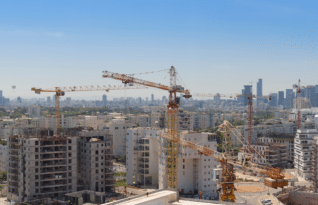
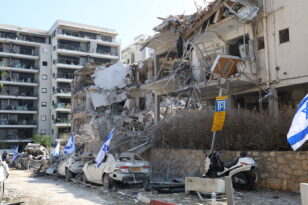
The Israeli real estate market continues to show strong demand for rental housing, even as regulatory and permitting hurdles persist. This was the key message from industry leaders speaking on the Israeli real estate panel at the 2025 CAPITAL SUMMIT of SCALA GROUP and Calcalist in Eilat.
Yossi Parshkovsky, chairman of Prashkovsky Group, highlighted that the strongest demand today is for long-term rentals: “Income-producing real estate is the most solid investment today, and the strongest demand is in rental housing. In every project we won under the ‘Dira Lehashkir’ framework, we are at 100% occupancy with a waiting list. Demand is rigid. More households are choosing rental housing compared to past years. The rise in families wanting homes with a secure room (mamad) since the war with Iran has also pushed up demand for long-term rentals.”
Parshkovsky also warned of deepening bureaucratic problems in the industry: “We still face regulatory challenges and major difficulties obtaining permits. It used to take about a year to get a permit; now it’s over three years. The Israel Land Authority sells land, but there is no infrastructure. New neighborhoods are marketed, but it will take four years to get infrastructure in place. Municipalities add design requirements that delay us further.”
Clara Zabragle, Head of the Real Estate Sector at Bank Hapoalim, pointed to the imbalance between supply and demand and its effect on housing prices: “Everything leads to rising prices. About 200,000 young couples are sitting on the sidelines waiting to win a discounted apartment. Meanwhile, they pay rent, which is money down the drain, and unfortunately, this pushes prices upward. The public has been told for more than a year that interest rates are about to fall, and people are repeatedly disappointed. Many are waiting on the sidelines for rates to drop. Buying a home is a significant decision with a psychological element as well.”

On the financial side, Zabragle noted the banks’ supervisory role: “As a bank overseeing business plans, the volume of credit in the real estate sector, including guarantees, exceeds 100 billion shekels.” She also pointed to possible future trends in mortgages: “There may be financial solutions such as extending the loan term, or leaving debt to your heirs. It’s possible mortgages will be passed on in inheritance, with parents taking a loan for 40 years instead of 30. This is how it’s done abroad in some cases.”
Eli Levy, co-CEO of More Investment House, stressed the advantage of investing in income-producing real estate: “Outside of the residential sector, the income-producing real estate sector is currently priced more reasonably compared to the past. Investing in real estate is a great way to gain exposure to the sector, and if real estate — then income-producing real estate over housing.”
Gil Calderon, CEO of Menora Underwriting, also underlined the difference between residential and commercial real estate: “Construction company stocks peaked in 2023–24. This year, income-producing real estate performed better than residential construction. In housing, factors like labor shortages and long construction timelines are heavy burdens.”

Nadlan Center is Israel’s leading real estate news and knowledge platform in Hebrew, created for industry professionals. Founded by experts in the field, it delivers in-depth, up-to-date coverage on urban renewal, planning and construction, taxation, and housing policy — tailored to the needs of developers, investors, planners, and financiers. In addition to its widely read news content, Nadlan Center hosts major industry events, professional conferences, and training programs that support the growth and development of the Israeli real estate sector.
Learn more: https://www.nadlancenter.co.il