Many overseas buyers today feel a strong pull toward owning a home in Israel, but they are also facing a new set of financial and practical uncertainties. From exchange-rate shifts and construction index increases to delivery delays, developer risk, and challenges selling property abroad, the landscape has become more complex than it was just a few years ago. This article explains the six most common concerns buyers are navigating right now and offers practical guidance on how to approach them with clarity, preparation, and confidence.
We have just passed through the most emotional stretch of the Jewish calendar: Yom HaShoah, Yom HaZikaron, and then Yom HaAtzmaut. The transition from mourning to celebration is always a difficult one, but it is also a necessary one. To celebrate our beautiful, beloved, remarkable, and unique homeland, we must first remember the price paid to build and defend it.
We carry our bereaved families, the parents, spouses, and children growing up without those they love. We carry our wounded soldiers, thousands of them, many still healing in ways that are not always visible. We carry the emotional toll on a generation of young men and women who have fought, and are still fighting, to defend our country and our people. We carry the memory of every soldier who has fallen defending the State of Israel, and every victim of terror whose life was tragically cut short.
And yet, we celebrate with our hands on our hearts. This year, more than ever, we felt the full weight of the price that has been paid, with so many fresh graves and so many newly bereaved families among us.

Speaking honestly about today’s realities
Buying a home in Israel has become, for many people, an expression of identity, belonging, and security in a world that is changing in unsettling ways. Jewish families are responding to the rise of antisemitism around the globe, a reality that feels increasingly familiar in ways many of us hoped we would never experience again.
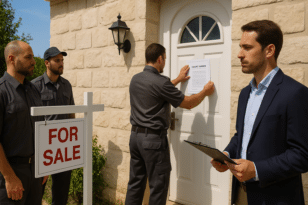
As the founder of Buyitinisrael, I want to help make that step possible. But I also feel a responsibility to be honest about the challenges people are facing. This week alone, I was personally informed by seven different developers and real estate attorneys about purchase transactions that collapsed, not because buyers changed their minds, but because of the financial realities overseas buyers are dealing with right now. These are real people with real plans, caught off guard by factors they had not fully anticipated.
This article is for anyone who is thinking seriously about buying a home in Israel today. I want to walk through the six most common concerns I am hearing right now, explain what is actually happening in the market, and, where possible, offer some practical ways to think about navigating them.
1. The Strength of the Shekel — What the Exchange Rate Is Really Costing You
The single biggest financial shock for overseas buyers right now is the exchange rate. Many people still carry a mental image of the shekel as the weaker partner against the dollar or the pound, but that assumption is no longer accurate, and it is costing buyers serious money.
In September 2023, just weeks before October 7th, one US dollar bought roughly 3.85 shekels. In the immediate aftermath of the attack, with war declared and uncertainty rising, the shekel weakened further and briefly touched 4.08. Many overseas buyers who signed contracts during that period understandably assumed the shekel would remain weak, yet what followed instead was a sustained strengthening of the Israeli currency.
By late 2025, the rate had dropped to around 3.17, and as of April 2026, it is approximately 2.97 shekels to the dollar. This represents a move of more than 25 percent in the shekel’s favour in less than three years. The economic reasons behind this shift are complex, but for buyers, the practical implications are very simple.
So, for example, a buyer who signed a contract in October 2023 on a new-build apartment priced at 5,000,000 NIS would at the time have been looking at a purchase cost of roughly $1.3 million. After paying a 20 percent deposit of about $260,000, the buyer may have expected to complete the remaining 4,000,000 NIS balance later under similar exchange conditions.
At today’s exchange rate, however, that same 4,000,000 NIS balance costs approximately $1.32 million. In practical terms, this means paying roughly $280,000 more than originally expected on the balance alone for the same apartment, even before taxes, legal fees, or construction index adjustments are taken into account. For many families, this is not a marginal difference but a change that can significantly affect whether completing the purchase still feels comfortable or even possible.
For buyers who are planning a purchase now, the most cautious approach is to assume that the shekel could strengthen even further before final payments are due. Exchange rates may improve, but they may not, and a transaction should always be structured so that it works at today’s rate rather than depending on more favorable conditions in the future.
Buyers are strongly encouraged to speak with a foreign exchange specialist who may be able to offer forward contracts that lock in today’s rate for future payments and, in certain cases, options that protect if the shekel strengthens further.
2. Concerns About Whether Prices May Fall — It May Be Worth Waiting
Another question that comes up frequently today is whether it makes sense to wait for prices to come down before buying. There is no question that housing in Israel is expensive. For overseas buyers in particular, the combination of high prices, a strong shekel, rising construction costs, and higher interest rates has made purchasing more challenging than it was several years ago. These pressures are real, and it is reasonable for buyers to wonder whether waiting might create a better opportunity later.
Since the war began, the local housing market has clearly slowed. Transaction volumes have dropped significantly, and in some areas, prices have softened. Developers are selling far fewer apartments than usual, and many buyers, both in Israel and abroad, have chosen to pause decisions until there is greater stability.
At the same time, it is important to distinguish between a market that is weakening and a market that is waiting. Israel has been operating under extraordinary conditions. Large numbers of reservists have been called up for extended periods. Families have been disrupted. Interest rates remain high. And uncertainty affects nearly every major financial decision people are making right now. In this environment, it is not surprising that many buyers are sitting on the sidelines. That does not mean demand has disappeared.
Israel continues to experience strong population growth, ongoing immigration, and limited land supply in the areas where most people want to live. In addition, a very large portion of the country’s housing stock was built before current security and earthquake-resistance standards. Many older buildings do not include protected rooms, and there is a significant long-term demand for newer construction that meets today’s expectations for safety and quality of life.
It is also worth remembering that interest in purchasing homes in Israel from overseas buyers is higher than ever. In the neighborhoods and cities that tend to attract Anglo and international buyers, demand remains steady even during periods when the broader market slows.
Israel’s housing market has repeatedly defied predictions of decline
No one can predict how prices will move in the future. But it is reasonable to recognize that today’s slowdown reflects uncertainty more than a fundamental change in long-term demand. As stability returns, activity in the market is likely to return with it, and with that, prices are expected to rise. For buyers who are thinking about Israel as part of their future, the question is often less about timing the lowest possible price and more about deciding when the purchase makes sense within their own plans.
3. The Home You’re Planning to Sell — And Why That Plan Needs a Rethink
This is the concern that keeps me up at night when I think about our community of buyers. The classic model for the overseas Jewish buyer has long been straightforward: buy in Israel now, continue living abroad for a few more years, and when the time comes (whether that means making Aliyah, a major payment milestone, or completion), sell the family home and use that equity to fund the purchase. It is a logical, sensible strategy. And for many years, in a world of rising property markets and high liquidity, it worked really well.
That world has changed. Property markets in many of the cities where our buyers live — London, Manchester, New York, Los Angeles, Toronto, and Paris — have cooled in recent years. Higher interest rates have reduced buyer demand across much of Europe and North America, and in some markets, prices have softened in real terms. In others, particularly in neighbourhoods with large Jewish communities, there is an additional layer of complexity. Families are making decisions driven not only by economics, but also by personal security, education, and a growing sense that the timeline for leaving may be moving closer.
In these areas, demand has traditionally been supported by buyers who specifically wanted to live within established Jewish community “bubbles,” often sustaining price levels above surrounding neighbourhoods. Today, as more families consider relocation at the same time, that balance has shifted. Non-Jewish buyers are often less willing to pay the same premium for those locations, which can reduce liquidity in the market. The result in some communities is that more people are looking to sell than buyers are stepping forward, fewer housing upgrades are taking place, and properties are simply taking longer to move.
This does not mean selling is impossible. It means timing has become less predictable than it once was — and in a purchase structure where your Israeli payment schedule has fixed deadlines, unpredictable timing on your overseas sale is a serious risk.
Let me be direct about what this looks like in practice. Say your Israel contract requires a significant payment, perhaps 30% or 40% of the purchase price, at a specific construction milestone. You planned to fund that payment from the sale of your home in London or New Jersey. If that sale takes six months longer than expected, or comes in at 10–15% below what you projected, your entire financing structure can unravel. We are not talking about a theoretical risk. I am seeing this happen right now.
So what can you do? Start the conversation about selling earlier than feels comfortable. Many buyers instinctively want to wait, hoping for a better price, trying to avoid disruption, or simply wanting to remain in familiar surroundings for as long as possible. That is completely understandable. But if your purchase in Israel depends on the proceeds of a sale abroad, then that sale is part of your purchase plan and needs to be treated with the same level of urgency and attention as everything else in the transaction.
Understanding what your property is realistically worth in today’s market, not the market of two years ago, is essential before committing to a payment schedule. In some cases, it may make sense to begin the sale process earlier than planned and rent temporarily until you are ready to make aliyah.
It is also wise to build a financial buffer into your plan and allow more time than you think you will need. At the same time, explore what interim financing options may be available if the overseas sale takes longer than expected. Israeli banks and some international lenders do offer bridging solutions, and your mortgage advisor should be helping you map these out from the beginning.
The goal is not to discourage you from moving forward. The goal is to make sure your purchase does not depend entirely on a timeline or sale price that you cannot control. The families who navigate this successfully are usually the ones who planned for the realistic scenario, not the optimistic one.
4. The Madad — What the Construction Cost Index Means for Your Purchase
Another concern buyers are paying much closer attention to today is the madad, specifically the Construction Cost Index, to which a portion of a new apartment’s purchase price is usually linked.
In most new-build contracts in Israel, payments are made in stages according to construction progress rather than being paid in full up front. Fifty percent of the remaining balance is typically linked to the Construction Cost Index, which means that as construction costs rise, the amount still owed increases as well. As a result, the final price at completion can be meaningfully higher than the price written in the contract.
This mechanism has existed for decades and, for many years, attracted little attention because inflation was relatively stable. What has changed is the environment. COVID disrupted supply chains, the war in Ukraine increased the cost of metals and materials, and October 7th created an immediate shortage in Israel’s construction labour force. More recently, the Iran conflict has added pressure through higher fuel costs, freight disruptions, and rising shipping prices. A clause that once felt technical and predictable has become a real financial factor in purchase decisions.
According to Israel’s Central Bureau of Statistics, the residential Construction Cost Index rose 6.1 percent in the year to March 2025, driven largely by a 10 percent increase in labour costs. In the following year, to March 2026, it rose another 2.1 percent, again led primarily by labour costs, with additional pressure from higher transport and materials prices. Buyers who signed contracts since October 2023 have seen total increases of 8 to 10 percent on 50% of the unpaid portion of their purchase price due to madad adjustments alone.
On a 5,000,000 NIS apartment with 4,000,000 NIS still outstanding, this represents an additional 160,000 NIS to 200,000 NIS, or roughly $53,000 to $66,000 at today’s exchange rate. When combined with currency fluctuations, these increases can significantly affect the overall cost of a purchase.
The madad is something to plan for and negotiate around, not something that should prevent a purchase. The key is to understand its impact clearly before signing so that there are no surprises later. Your lawyer should explain clearly what portion of the purchase price is index-linked and how the payment schedule affects your risk. In some cases, index linkage can be negotiated. Developers operating in a slower sales environment are sometimes willing to offer a fixed price instead of index linkage in exchange for a slightly higher base price. For many buyers, that certainty is worth the adjustment.
Another option is to accelerate payments where possible, since reducing the outstanding balance earlier limits exposure to future increases. Some buyers with sufficient liquidity choose to pay a larger portion upfront, or even the full amount, provided appropriate bank guarantees are in place to protect them.
5. Concerns About Developers Deferring Projects as They Become Less Economically Feasible
Here is something that surprises many overseas buyers when they first encounter it. The fact that a developer has been promoting a project for years, signing residents, obtaining planning approvals, and generating interest does not necessarily mean the project will actually move forward. In today’s market, some projects simply do not reach construction.
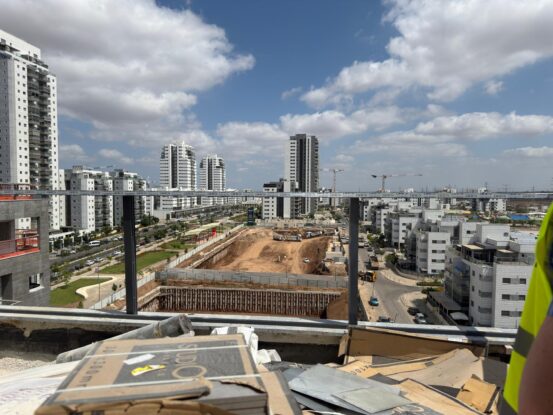
Across Israel, and especially in urban renewal projects, more developers are stepping back from schemes they have been advancing for years. The economics that once made these projects viable have changed. Construction costs have risen sharply, labour has become more expensive and harder to secure, and financing conditions are tighter than they were just a few years ago. In some cases, the numbers no longer work, and developers make a business decision not to proceed.
For overseas buyers, this has several important implications. First, it reduces choice. Projects that were expected to come to market are being postponed or shelved, which means fewer opportunities for buyers and less competition between developers. Supply was already limited in many areas of Israel, and this makes the situation more challenging.
Second, it makes the identity and strength of the developer far more important than many buyers initially realise. Not all developers operate with the same financial stability or experience. Some are well capitalised and able to absorb market changes, while others depend heavily on continuous sales to keep projects moving. In a market under pressure, that difference becomes significant.
For this reason, it is essential to understand exactly who you are buying from before signing a contract. Take the time to review the developer’s track record and existing commitments, and make sure your lawyer examines the structure of the project’s financing and banking support. A developer who cannot answer these questions clearly is not someone you want to be tied to for several years.
It is equally important to confirm that your legal protections are properly in place. Israeli law provides bank guarantees for payments made on new construction purchases, but the strength and structure of those guarantees vary and should always be reviewed carefully with a lawyer who specialises in this field before any funds are transferred.
6. Delivery Delays and Less Predictable Construction Timelines
Another concern buyers are raising more often today has to do with timing. Labor shortages, security conditions, supply-chain disruptions, and rising material costs have all affected how quickly projects move forward. Most new developments are continuing to progress, but fewer buyers today assume that delivery will happen exactly on the original schedule.
This is not only relevant for new construction. Buyers purchasing second-hand apartments with plans to renovate are often encountering similar challenges. Contractors are harder to schedule, materials can take longer to arrive, and costs may change during the process. Renovations that once followed a relatively clear timeline now require more flexibility than before.
At the same time, something else has changed over the past year. Many buyers who originally expected to move to Israel in five or even ten years are now finding that their timeline is moving forward more quickly than they anticipated. Sometimes their children decide to make Aliyah earlier. Sometimes work becomes more flexible. Sometimes the atmosphere abroad changes in ways that make being closer to Israel feel more urgent.
When that happens, the question is no longer whether the apartment will be ready eventually. The question becomes whether it will be ready soon enough. There are several ways buyers can prepare for this possibility. Some choose to purchase in areas where rental options are strong if they need a temporary solution. Others keep flexibility in their housing plans for the first year after arrival. In some cases, buyers explore whether a smaller interim property or rental period makes sense before moving into their long-term home.
The important thing is to recognize that both construction timelines and personal timelines can shift. Planning for that possibility early makes it much easier to adapt if circumstances change later.
So Should You Still Buy?
The concerns outlined above are real. They are not reasons to step away from the decision. They are reasons to approach it with the seriousness it deserves. Yes, you should buy, but it should be done with clear expectations, a solid structure, and the right professional guidance in place. And if that means adjusting expectations, buying something smaller, or choosing a location that was not your first choice, then so be it. The goal is to take a step forward. In time, there are often opportunities to improve and upgrade, but the families who begin the journey are the ones who place themselves in the strongest position for the future.
At Buyitinisrael, we are here to help you move forward with clarity and confidence.
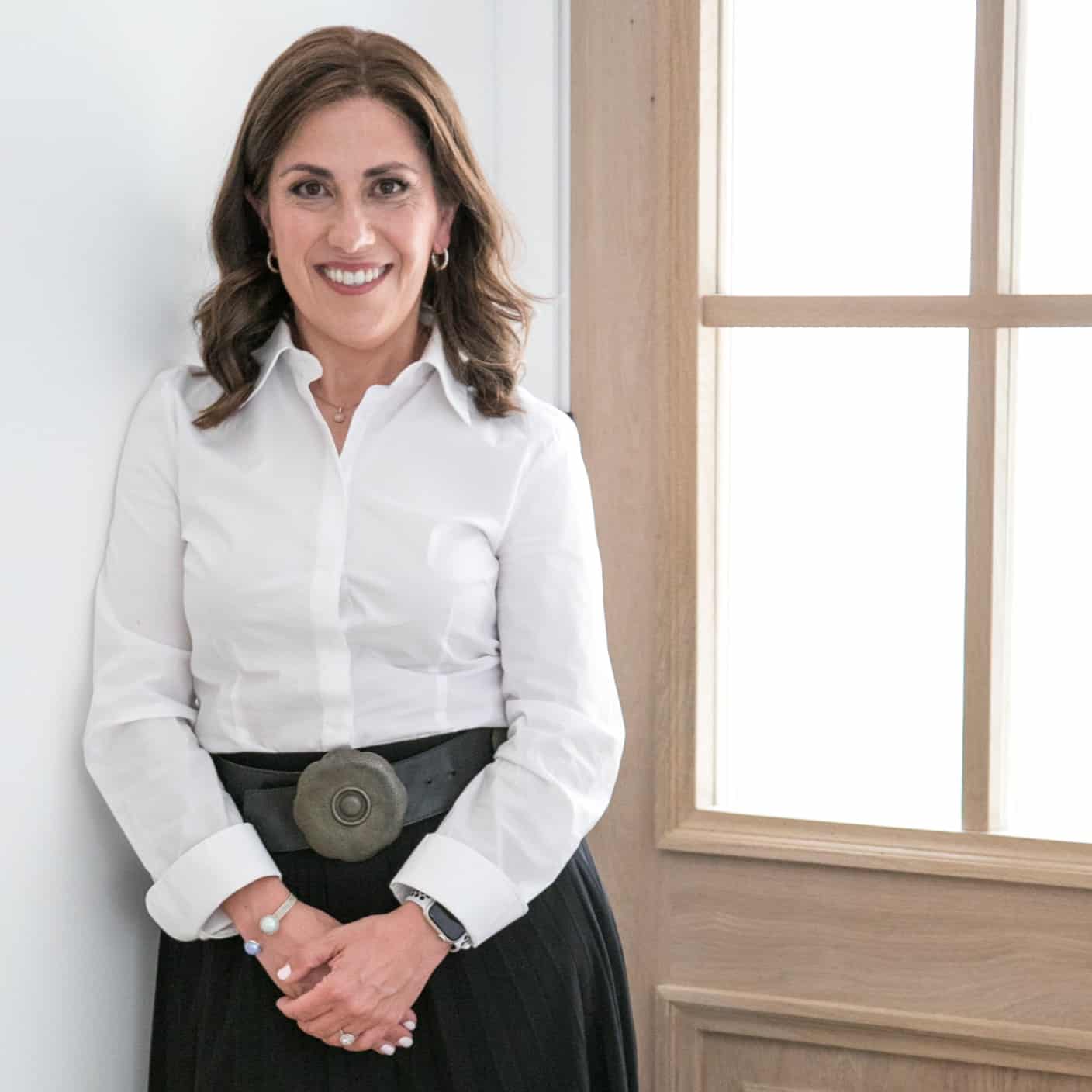
Debbie Goldfischer is the founder and CEO of Buyitinisrael and the host of the Israel Real Estate Podcast: On The House. A prominent figure in real estate since 2004, Debbie has spent two decades helping foreign buyers successfully purchase homes in Israel. Seeing a lack of reliable, English-language resources for navigating the Israeli property market, she launched Buyitinisrael.com in 2020. In addition to leading the platform, Debbie is available to personally assist you in finding the right property—whether new or resale—anywhere in Israel.
To connect with Debbie, email [email protected].