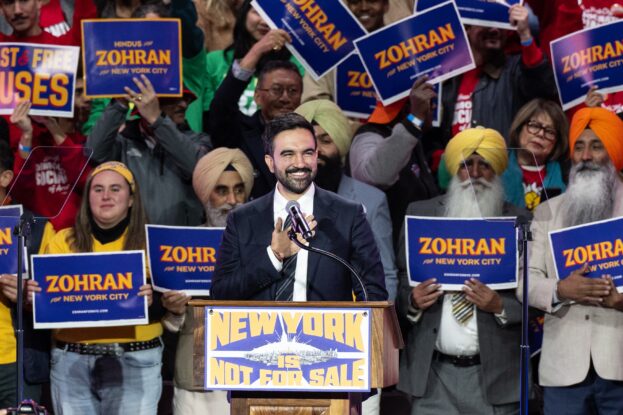
Zohran Mamdani’s historic victory as New York City’s first Muslim mayor marks far more than a political shift — it’s a wake-up call for Jews worldwide. In a city once defined by its Jewish strength and support for Israel, voters have chosen a leader who embraces BDS and rejects Israel’s legitimacy as a Jewish state. His victory, coupled with rising global antisemitism since October 7 and New York’s declining real-estate confidence, underscores a profound turning point. As trust in diaspora institutions weakens, Israel stands out as the only place where Jewish identity, security, and financial investment converge.
Late last night, 33-year-old Zohran Mamdani, a Queens assemblyman, made history as New York City’s first Muslim and South Asian mayor, winning just over 50% of the vote against Andrew Cuomo and Curtis Sliwa. For most New Yorkers, this is a political milestone. But for the majority of Jews, especially those who appreciate New York’s deep ties to Israel, it lands very differently. Mamdani has built his career on harsh criticism of Israel, rejecting its identity as a Jewish state and openly supporting the BDS movement — a dramatic shift for a city long seen as the center of American Jewish life.
His victory is not a local footnote. It signals a profound change in values, alliances, and the sense of security many Jews once felt in New York. In a city so intertwined with Jewish philanthropy, communal identity, and investment in local real estate, this election carries implications that reach far beyond politics — touching questions of safety, belonging, and where Jewish energy and capital will flow next.
Here are five reasons why Mamdani’s victory is deeply relevant for Israel’s real estate market:

1. A Moral Turning Point
New York, once the proud epicenter of Jewish life, has now elected a mayor who openly aligns with movements that delegitimize the Jewish state and excuse terror as “resistance.” What was once fringe campus rhetoric now sits in City Hall — a stark sign of how far parts of the American left have drifted. For many Jews, Mamdani’s win represents a deep erosion of the values that once made New York feel like a natural and safe home. Since October 7, antisemitism has surged across the Western world, and his victory feels connected to a broader cultural moment in which Israel is demonized and Jewish security feels threatened.
And this shift has direct implications for Israel. When Jewish communities sense that the ground beneath them is no longer stable, they turn toward the one place where their identity and future are firmly in their hands: Israel. Mamdani’s election is yet another reminder that, for many Jews, Israel is more than a homeland; it is a refuge. In that climate, owning a home in Israel has never felt more urgent, more meaningful, or more necessary.
2. A Shift in Politics, Policy, and Priorities
For decades, New York City was one of the safest and most comfortable places in the world for Jews, with major politicians across both parties reliably supportive of Israel. That sense of stability has now been shaken: Mamdani’s election, built on harsh criticism of Israel and open support for BDS, signals a profound shift in a city long seen as the world’s most significant Jewish center outside Israel. For many, it confirms that the political climate in New York has changed, and not in a direction that makes Jewish communities feel protected or represented.
His economic agenda deepens that concern. Higher taxes on property owners, stricter rent regulations, and aggressive redistribution threaten the very residents and developers who have built and sustained New York’s growth. The combination of ideological hostility toward Israel and punitive economic policy will drive families, professionals, and businesses to reconsider their future in the city. While some will head to other U.S. states, for many Jews, the natural destination will be Israel.
3. An Attack on NYC’s Real-Estate Establishment
Jewish developers and landlords have shaped a significant share of New York’s modern skyline, from major commercial towers in Manhattan to multifamily portfolios across the boroughs, their firms have long been central to the city’s real-estate market. Mamdani’s worldview strikes directly at that foundation: his housing agenda, framed as “justice,” calls for rent freezes, tax hikes, and heavy regulation. Under his administration, landlords are likely to face heightened scrutiny, developers increased red tape, and private capital cast in a negative light.
The irony is stark. The very community that helped build New York’s prosperity now feels pushed aside by a climate hostile to real estate developers and owners. And where will their energy, talent, and investment go? Increasingly toward Israel, a country that still values entrepreneurship, development, and growth. Its construction boom offers not only emotional grounding but also stability and significant financial opportunity.
4. A Threat to Jewish Charities and Capital Flow
For decades, billions of dollars have flowed from New York’s Jewish philanthropies and family offices to Israeli hospitals, universities, and community projects. One of the most troubling elements of Mamdani’s record is his support for policies that directly target pro-Israel and Zionist organizations. As a state assemblyman, he even sponsored legislation to revoke nonprofit status from groups tied to Israeli settlement activity — a move that, if echoed in city policy, could chill Jewish philanthropy across New York. Under a leadership that embraces these values, donors may reconsider keeping significant capital in the city.
Whilst a mayor cannot control international finance, he can shape the city’s tax climate, funding priorities, and institutional culture. If City Hall pressures banks, foundations, or community groups over their ties to Israel, the response will be simple: capital will move toward Israel, not away from it. And in Israel, that capital builds homes, creates jobs, and strengthens communities — a far more stable and welcoming destination for long-term investment.
5. From Uncertainty to Opportunity
Even before ideology entered the picture, New York’s real-estate market was already losing momentum. High taxes, rising crime, homelessness, and endless bureaucracy have pushed investors away in recent years, and Mamdani’s policies will only accelerate that decline.
Israel tells a different story entirely. Despite security, economic, and geopolitical challenges, its property market continues to show resilience and confidence, from Tel Aviv’s booming business districts to Jerusalem’s renewal projects and the rapid growth of coastal cities like Netanya and Ashkelon. While New York, under Zohran Mamdani, enters a period of uncertainty, Israel moves forward with clarity and strength. For many Jews, the message is unmistakable: the tides are turning, and those who want to live, build, and invest in their own land are increasingly looking toward Israel.
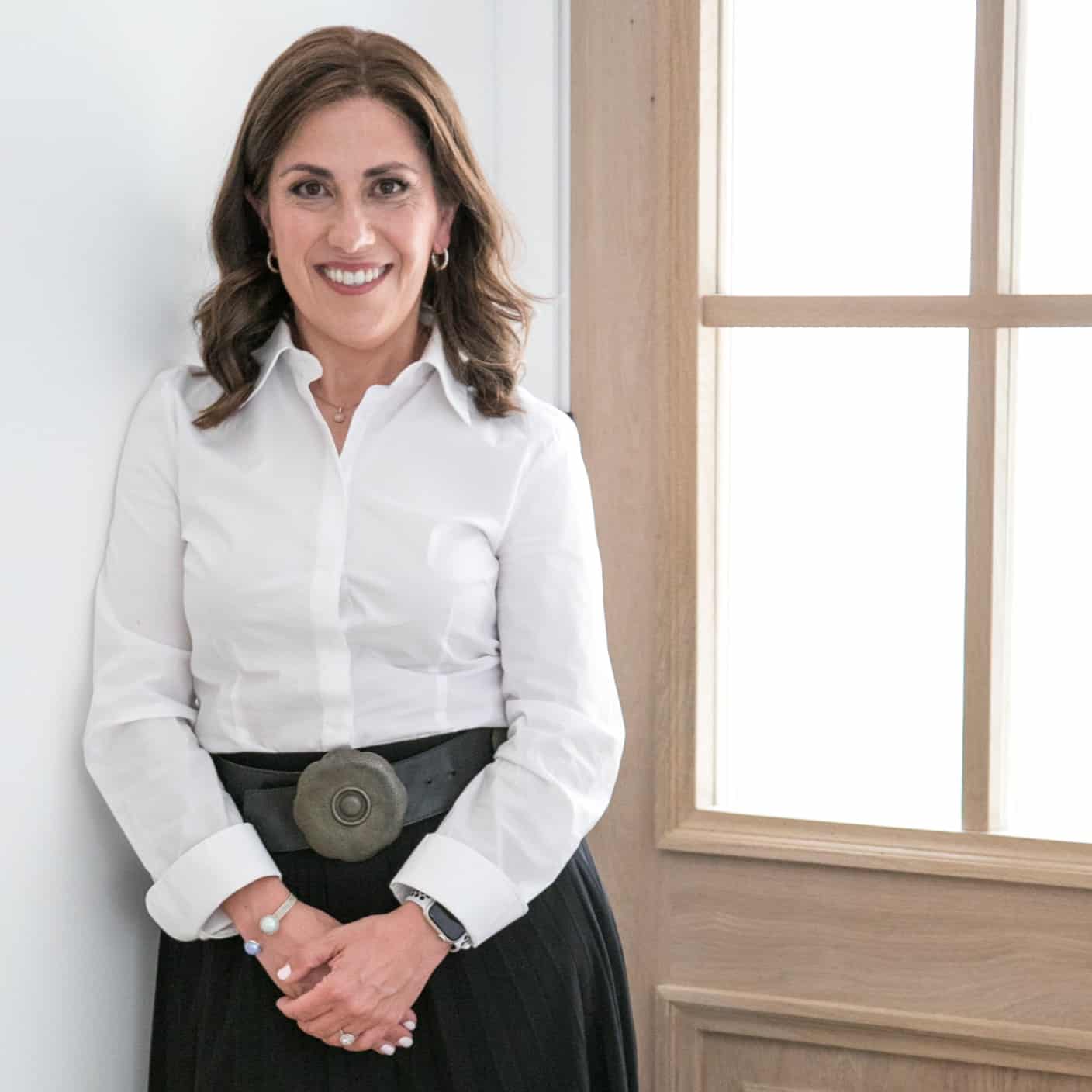
Debbie Goldfischer is the founder and CEO of Buyitinisrael and the host of the Israel Real Estate Podcast: On The House. A prominent figure in real estate since 2004, Debbie has spent two decades helping foreign buyers successfully purchase homes in Israel. Seeing a lack of reliable, English-language resources for navigating the Israeli property market, she launched Buyitinisrael.com in 2020. In addition to leading the platform, Debbie is available to personally assist you in finding the right property—whether new or resale—anywhere in Israel.
To connect with Debbie, email [email protected].