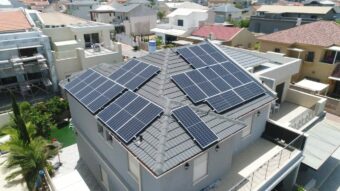
The guide includes instructions for installing systems in both apartment buildings and single-family homes, as well as a “calculator” that presents setup costs and estimated returns. According to the ministry’s data, the average cost of installing a solar system in a multi-story building ranges from NIS 130,000 to 150,000, with an average annual return of around 12%.
By Li Saadon, Nadlan Center
In line with the policy of the Ministry of Energy and Infrastructure to promote 100,000 home solar systems by 2030, the ministry has launched a new guide titled “Energy Independence and Self-Consumption.” The guide is intended for private homeowners and residents of shared buildings interested in installing a solar system with energy storage. Published on the ministry’s website, the guide aims to provide the public with practical, up-to-date information on options for self-generation of electricity, smart consumption management, and increased household energy independence—alongside significant economic viability in both emergencies and routine times.
A link to the solar system installation guide published by the Ministry of Energy is available on the ministry’s website.

From an economic perspective, the data on the site points to clear feasibility for both shared residential buildings and single-family homes, assuming standard averages. In a shared building with a system capacity of around 30 kilowatts, annual solar production is estimated at approximately 64,000 kWh—far exceeding the estimated electricity consumption of common building systems, which is about 880 kWh.
Integrating storage of around 10 kWh allows for more efficient consumption management and increased use of the electricity produced. According to the data, this capacity is sufficient to power lighting, a refrigerator, chargers, and an air conditioner for several hours. Installation costs are estimated at NIS 130,000–150,000, with an annual return of around 12% and an investment payback period of roughly seven years, considered attractive in the energy market. It is important to note that this is an average return and, as will be explained further, it may be significantly higher, even exceeding 20%.
The economic case is also clear for single-family homes: a system with a capacity of around 15 kilowatts generates more than 32,000 kWh per year, compared with average household electricity consumption of about 8,800 kWh. Storage of approximately 10 kWh similarly enables the use of electricity for lighting, refrigeration, charging, and air conditioning for several hours. Installation costs range from NIS 90,000 to 100,000, with an estimated return of around 10% and an investment payback period of about eight years. Communities eligible for an urban premium, which adds 6 agorot per kilowatt-hour produced, enjoy even higher economic viability and a further reduction in the payback period.

Nadlan Center is Israel’s leading real estate news and knowledge platform in Hebrew, created for industry professionals. Founded by experts in the field, it delivers in-depth, up-to-date coverage on urban renewal, planning and construction, taxation, and housing policy — tailored to the needs of developers, investors, planners, and financiers. In addition to its widely read news content, Nadlan Center hosts major industry events, professional conferences, and training programs that support the growth and development of the Israeli real estate sector.
Learn more: https://www.nadlancenter.co.il