When renovation work in one apartment causes dampness that spreads through the building’s common areas and into a neighbor’s home, who is legally on the hook — the owner whose work caused it, or the building committee? A Haifa Supervisor of Land Registration ruling offers a clear answer: even when one owner is at fault, the duty to fix common-area defects falls squarely on the building committee. Here is what happened, and what it means for apartment owners in shared buildings.
By Adv. Ella Tovim Gadasi, Head of Real Estate, with the assistance of intern Shachar Alkrief
In this case summary we review a decision handed down by the Supervisor of Land Registration in Haifa, in a dispute over moisture damage in a residential apartment in a shared building. The Supervisor looked at a situation where private renovation work carried out by one apartment owner inside their own unit ended up causing a defect in the building’s common areas — which then caused damage to a neighboring apartment. The decision examines how far that apartment owner can be held responsible for the damage to their neighbor, and how that responsibility differs from the building committee’s separate duty to maintain the common areas.
Facts of the Case
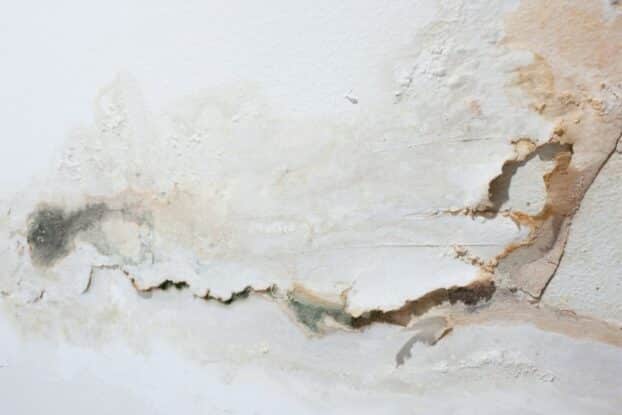
The plaintiffs, who own an apartment in a shared building, filed a claim before the Supervisor of Land Registration against the owner of the apartment directly above theirs (hereinafter: “the defendant apartment owner”). Later, an amended claim was filed that added the building committee (va’ad bayit) as an additional defendant. The plaintiffs asked the Supervisor to order the defendants to fix the source of the dampnessand repair the resulting damage to their apartment. An expert inspection found that the moisture was originating from the building’s common areas — but that it had been caused by work carried out in the defendant’s apartment as part of a balcony construction project in the building. The building committee argued that the responsibility for fixing the problem should fall on the defendant apartment owner, since the damage clearly occurred as a result of work done in her unit. The defendant apartment owner disagreed, arguing that since the defects were located in the common areas, only the building committee — as the body responsible for those areas — had the authority and obligation to repair them.

The Legal Question
Can an apartment owner be held liable for damage to the common areas caused by work they carried out in their own unit, where that damage then spread to other apartments in the building? And how far does the Supervisor of Land Registration’s authority extend when it comes to claims based on tort law?
The Court’s Decision
Based on the expert’s findings, the Supervisor established that there was no dispute that the defects were located in parts of the building that qualify as common property under Section 52 of the Land Law. Under Section 3 of the Model Bylaws (the First Schedule to the Land Law), one apartment owner can demand that another carry out repairs inside their unit if failing to do so risks causing damage to their own apartment. However, when the repairs needed are to the common areas themselves, an apartment owner can only make that demand of the building committee — not of another individual owner. The reasoning is straightforward: the building committee is the body legally entrusted with the upkeep of the common areas, and that responsibility rests with it alone. The Supervisor also rejected the building committee’s attempt to shift the repair obligation onto the defendant apartment owner. The Supervisor made clear that if the building committee believes the defendant caused the damage, it is free to pursue a separate legal action against her in tort before the appropriate court. As a result, the building committee was ordered to carry out repairs to the common areas in line with the expert’s recommendations, as well as the necessary repairs inside the plaintiffs’ apartment. The claim against the defendant apartment owner was dismissed.
Author’s Note
This ruling draws an important practical distinction between the person who caused the damage and the person who is legally required to fix it. When a defect originates in the common areas, the order to repair it will be directed at the building committee — under Section 3(a) of the Model Bylaws — even if the defect was physically triggered by private work carried out in one owner’s unit. If the building committee wants to recover the cost of those repairs from the owner whose work caused the problem, it must pursue that through a separate tort claim in the appropriate court, outside the scope of the Supervisor’s authority. This case makes the division of powers clear: the Supervisor can order the building committee to fix defects in the common areas, and even to repair related damage inside an affected apartment, but cannot award compensation in damages. The practical takeaway is that from the very beginning of a dispute, it is important to think carefully about what outcome you are seeking and which legal route will get you there — an injunction to compel repairs under the Model Bylaws, or a monetary claim in tort before the competent court.
Haifa 149/24 Rosen Rosenblum Eliyahu v. Wildauer Kami (Nevo, 03.12.2025)
Gindi Caspi & Co. is one of Israel’s most prominent law firms in real estate, planning and zoning, and urban renewal. With decades of extensive experience handling complex and large-scale real estate transactions, the firm is consistently ranked among the top-tier firms in these fields by all major rating companies. Notably, the international LEGAL 500 recognized Gindi Caspi & Co. as a Leader in real estate, planning, and zoning and highlighted Adv. Ziv Caspi as a Leading Individual in Israeli law. The firm has also received numerous accolades, including ranking among the top real estate law firms (Dun’stars) in planning, zoning, and urban renewal. It was honored as a “pillar and cornerstone in fulfilling the nation’s vision for building and settling the land.” For five consecutive years, the firm has been ranked first in Israel in the field of urban renewal.
For inquiries, contact [email protected].