Padel is having a moment in Israel — and increasingly, a selling point in real estate. Municipalities are converting old tennis courts, chains are opening new clubs nationwide, and luxury developers are now designing padel into their amenity packages, right next to the pool and the gym. What started on the court is shaping how homes are built.
Padel has become one of the fastest-growing sports in the world. Played on a smaller, enclosed court that blends elements of tennis and squash, it exploded out of Spain and Latin America over the past decade and now counts more than 35 million players across roughly 150 countries. The number of dedicated courts worldwide passed 77,000 by the end of 2025 alone, a jump of more than 15 percent in a single year. Part of the appeal is how easy it is to pick up: matches are played in doubles, points move fast, and the enclosed glass walls keep rallies going far longer than beginners typically manage on a full-size tennis court. It is also inherently social — the game rewards conversation as much as competition, and in clubs around the world, the post-match coffee has become as much a part of the ritual as the game itself.
That global boom has now firmly reached Israel. Not long ago, tennis was the obvious choice for anyone in the country looking to pick up a racket; today, padel has become one of Israel’s fastest-growing sports, and in a growing number of communities, the first choice for new players. By 2025, the country already had roughly 130 padel courts up and running, with another three dozen under construction — a remarkable pace for a sport that barely existed here a decade ago. Municipalities, private clubs, and developers are investing heavily in new facilities, and in some locations existing tennis courts are being converted into multiple padel courts at once, letting more people play at the same time while generating far higher utilization and revenue than the tennis courts they replaced.
The trend is especially visible in central Israel. Padel Israel, the country’s leading network, now runs courts, lessons, and organized leagues in Tel Aviv, Ramat Gan, Petah Tikva, Rehovot, Rishon LeZion, Kfar Saba, and Caesarea, while independent clubs have opened in Modi’in-Maccabim-Re’ut, Ra’anana, Herzliya, Netanya, and Jerusalem, where peak evening slots sell out well in advance.

One of the clearest signs of how mainstream the sport has become is Kfar Maccabiah in Ramat Gan, the storied sports and hotel complex tied to the Maccabiah Games. Alongside its eleven long-standing tennis courts, the venue added eight courts, which have quickly become some of the busiest in the country, turning a historic tennis club into one more example of established sports facilities making room for the new arrival rather than resisting it.
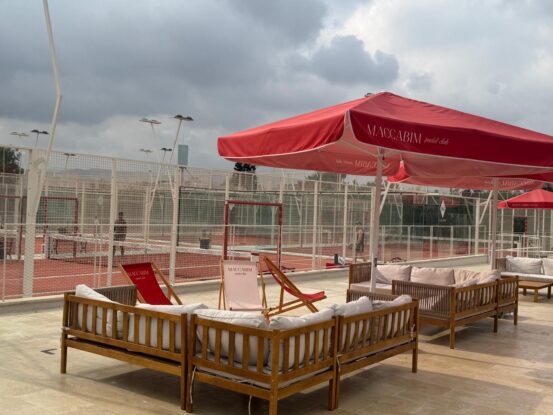
Ownership patterns are shifting too, not just locations. In Modi’in-Maccabim-Re’ut, the Maccabim Padel Club operates under the Fattal Group, the hospitality and real estate company best known in Israel for its hotel chain — a reminder that padel’s growth is pulling in operators well outside the traditional sports and country club world.
Also in Modi’in, the municipality is building an entirely new five-court complex on Emek Zvulun Boulevard next to the municipal sports center, part of a broader push to expand sports infrastructure and give residents easy access to the country’s hottest new pastime.
Ra’anana may be making the boldest bet of all. The city’s municipality approved a plan to build thirteen new courts on the rooftop of the Rananim Mall, an 8-million-shekel, 6,000-square-meter project expected to open in early 2026, while a separate municipal tender is underway for a dedicated indoor padel center.
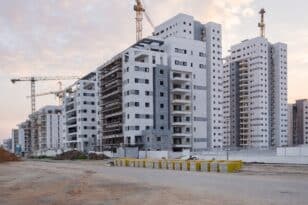
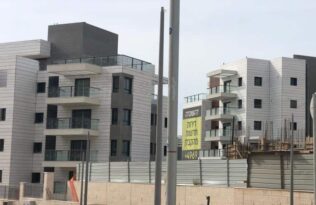
Developers have noticed, too. Luxury residential projects are beginning to market padel courts alongside swimming pools, fitness centers, and co-working lounges, and these amenities are no longer simply nice extras — they are becoming part of the lifestyle buyers expect, particularly in premium developments. One confirmed example is Dimri Yama, Sde Dov, where the developer has confirmed that its amenity package will include a padel court for residents, alongside the pools, spas, and fitness studios. It is a small addition on paper, but a telling one: when a developer of Dimri’s scale starts treating a padel court the way it once treated a rooftop pool, it is a sign the amenity has crossed over from niche perk to expected feature.
Not every location is building new — many are converting. In Herzliya, a sports center recently won approval from the district planning and building appeals committee to turn existing tennis courts into padel courts, a case likely to become a template as other clubs weigh whether to follow suit.
For international buyers considering a move to Israel, this is another glimpse into how Israeli communities are evolving. Just as cafés, cycle paths, and shared workspaces have become desirable neighborhood features, padel is emerging as another marker of modern urban living. Local clubs are turning it into organized leagues and academies nationwide, and it is influencing the design of residential projects, changing how public sports facilities are used, and becoming part of everyday life across the country. Already, buyers are not just asking how many bedrooms a development has — increasingly, they ask whether it has a padel court.
The Buyitinisrael Editorial team is made up of industry experts, journalists, researchers, editors, and translators working together to deliver reliable, up-to-date information about the Israeli property market — all in English. With a strong focus on transparency and accessibility, our goal is to empower English-speaking buyers by helping them understand the market and navigate the real estate process with clarity and confidence.
For inquiries, email [email protected].