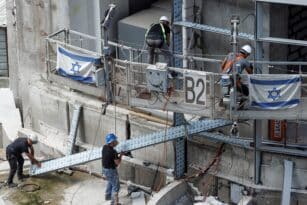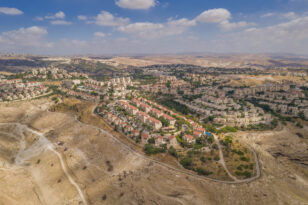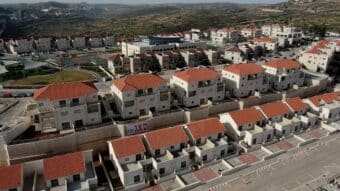
Givat Ze’ev has officially become a city, after Central Command chief Avi Bluth signed the final order completing its transition from local council to full municipal status. The move makes Givat Ze’ev the fifth community in Judea and Samaria to reach city status, following a review process that stretched across multiple government bodies and took years to complete.
The upgrade was formalized through a joint process involving the Interior Ministry, the Geographic Committee, and the Settlement Administration at the Ministry of Defense, which examined Givat Ze’ev’s population trends and development trajectory before signing off on the change — a step officials describe as necessary to give the local authority a governance structure that matches the scale of what the community has become.
Perhaps the most striking detail to emerge from this announcement isn’t the status change itself, but the population figures behind it. According to one report, Givat Ze’ev’s official registered population stands at approximately 35,000 residents. Officials have described Givat Ze’ev as one of the fastest-growing communities in Israel, and the Interior Ministry has pointed to that growth trajectory as a central justification for the status change, arguing that a full municipal framework will allow the local authority to expand services and manage continued development more effectively than a local council structure would. For anyone tracking the Judea and Samaria market, a registered population lagging behind actual residency is often a signal of sustained building activity and demand outpacing official planning baselines — though that interpretation is analysis, not something officials stated directly.
What city status changes on the ground
Mayor Yossi Asraf welcomed the announcement in personal terms, calling it a historic moment for the community and describing it as a significant boost for the broader settlement presence in the Jerusalem envelope. He framed the shift primarily as a practical one: city status, he said, will let the local authority tailor its municipal framework to the community’s actual needs, strengthen its capacity to deliver services, and better manage the challenges that come with continued growth.

At the same time, Asraf was careful to draw a line between administrative upgrade and community identity, saying Givat Ze’ev intends to hold onto the smaller-town, community-oriented character that has defined it even as its formal capabilities expand. That balance — scaling up municipal infrastructure while preserving a lower-density, community feel — is a theme that recurs often in Judea and Samaria communities transitioning to city status, and it may matter to prospective buyers weighing whether growth will come with the kind of density changes that affect property values and neighborhood character.
The political framing
Beyond the municipal mechanics, the announcement was quickly folded into broader political messaging. Finance Minister and Defense Minister Bezalel Smotrich, who chairs the Religious Zionism party, described Givat Ze’ev’s new status as part of a multi-year policy he has led aimed at strengthening the settlement enterprise — a policy he tied to the establishment of dozens of new communities, the regularization of agricultural outposts, and formal declarations of state land in the region.
Smotrich also contrasted the announcement with what he described as a hypothetical Eisenkot-led government that would evacuate settlements and pursue a Palestinian state, framing Givat Ze’ev’s upgrade as part of an effort to entrench settlement facts on the ground against that scenario. That framing is Smotrich’s own political positioning — Eisenkot does not currently lead the government — and it reflects the highly contested nature of settlement expansion as a subject in Israeli politics, where informed observers hold sharply differing views on both the legal status and long-term implications of continued building in Judea and Samaria.
Yisrael Gantz, who heads the Binyamin Regional Council and chairs the Yesha Council, offered a more locally focused reaction, calling the shift to city status a natural outcome of years of sustained family growth in Givat Ze’ev. He noted that the community has drawn thousands of families over the years and has grown from a small council into what he called a thriving city, and he pledged continued development across Judea and Samaria going forward.
Smotrich also credited city council members Ilana Dror and Aharon Heineman with helping lead the process at the local level, alongside the Interior Ministry, the Central Command chief’s office, the Civil Administration, and the Settlement Administration.
Part of a broader wave
Givat Ze’ev’s announcement did not arrive in isolation. It follows closely on other recent settlement-related approvals in the region, including the signing of new jurisdictional boundaries for multiple communities and the approval of housing plans across several other Judea and Samaria locations, according to Israeli press reports. For now, Givat Ze’ev joins a small group of communities in Judea and Samaria — now five in total — that have completed the transition from local council to full city status.
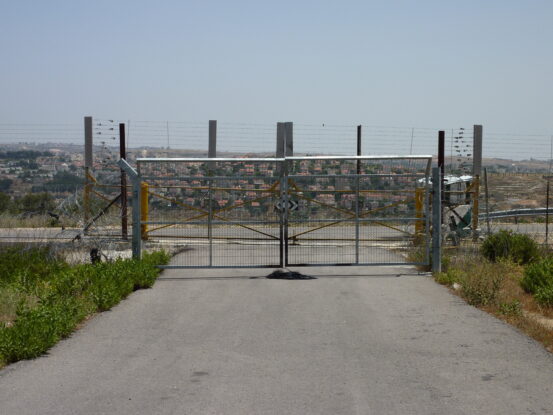
Photo Credit: https://commons.wikimedia.org/wiki/File:Beit_Ijza_Agricultural_Gate.JPG
The Buyitinisrael Editorial team is made up of industry experts, journalists, researchers, editors, and translators working together to deliver reliable, up-to-date information about the Israeli property market — all in English. With a strong focus on transparency and accessibility, our goal is to empower English-speaking buyers by helping them understand the market and navigate the real estate process with clarity and confidence.
For inquiries, email [email protected].