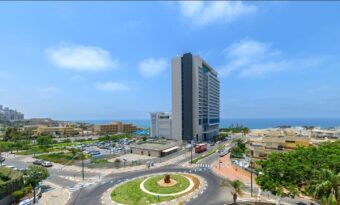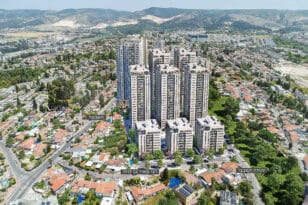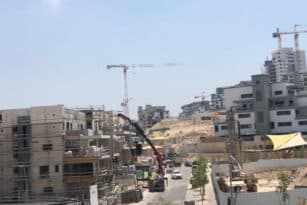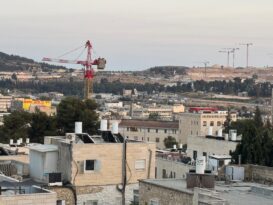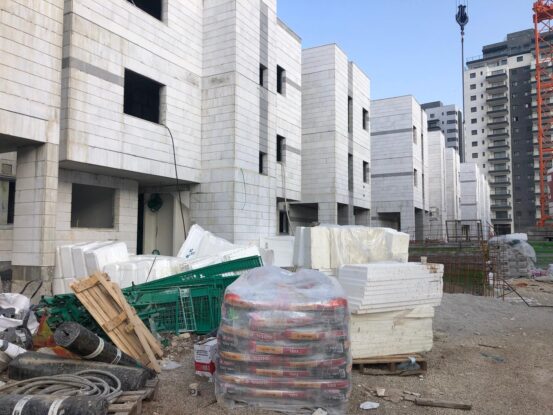
Building in Israel keeps getting more expensive, even as home prices soften. JLL’s Global Construction Costs Index 2026 says the world has entered a permanently more expensive era of building. Annual cost increases of 3% to 6% are now the norm, and the Middle East faces the steepest rises of any region. Israel is firmly part of that picture. War, labour shortages and fragile supply chains have all pushed costs up, and the construction cost index rose 3.9% in the year to October 2026. For anyone buying new, renovating or holding property in Israel, construction costs now shape almost every decision.
Israel’s housing market is sending mixed signals. Apartment prices have softened over the past year. Yet the cost of building, redoing a kitchen or strengthening an older block keeps climbing. That gap matters whether you’re buying off-plan, renovating an older apartment or holding a home that will need work later. So it’s worth asking whether these costs are likely to ease.
The short answer, from both global and Israeli data, is no. Israel construction costs have climbed steadily since the COVID pandemic, accelerated during the war, and show no sign of reversing.
A Global Shift With Local Consequences
JLL’s Global Construction Costs Index 2026, published in October, draws on more than 1,000 projects across six building types in 14 markets. Its central finding is that annual construction cost growth has settled at 3% to 6%. Before 2020, the industry planned around 2% to 3%. Over the past five years, costs in JLL’s markets rose 25% to 30% on average, and up to 40% in some. In most markets, construction prices are rising faster than consumer inflation.

JLL forecasts a further 3.1% to 4.2% rise globally in 2027. The Middle East has the highest forecast range of any region, at 3.4% to 5.4%, ahead of Asia Pacific, North America and Europe.
Israel’s Data Tells the Same Story
According to the Central Bureau of Statistics, the Israeli construction cost index rose 3.9% between October 2025 and October 2026. The main driver was a 5.2% rise in labour costs. Over the same period, consumer prices rose just 1.1%. The index jumped 6.4% in the year to April 2025, at the height of the war’s labour crisis. Wages rose more than 10%.
The Real Estate Appraisers Association in Israel estimates actual building costs across 16 regions. It found that costs rose about 3.2% on average in the year to June 2026. They rose in 54 of the 64 categories it tracks. Central Tel Aviv led the way. Building low-rise homes there now costs around NIS 12,000 per square metre, up from NIS 10,400 a year earlier. Jerusalem rose far more modestly, by under 1%. These figures cover direct building costs only, excluding VAT, planning, levies and financing.
What makes this moment unusual is that costs are rising while prices are not. According to the CBS, the average apartment sold for about NIS 2.29 million in the third quarter of 2026. That’s 1.5% less than a year earlier. Developers now face more expensive construction and buyers who will no longer pay any price.
Labour, Supply Chains and the War
JLL identifies labour as the structural problem. Construction wages rose between 8% and 35% across key markets from 2020 to 2026. In 64% of markets, builders reported shortages of skilled workers, including electricians and carpenters.
In Israel, the shortage arrived unexpectedly. After October 2023, Israel largely stopped Palestinian workers from entering. Replacing them with foreign workers has been slow and expensive. Supply chains took a hit too. The squeeze began with COVID, when factory closures and shipping delays sent material prices soaring. Then, in 2024, Turkey restricted and later froze trade with Israel. According to Globes, Turkey had supplied half of Israel’s imported cement and plaster. It also supplied a fifth of its imported iron and steel. Houthi attacks on Red Sea shipping added further freight costs.
JLL also points to an unexpected global factor: the race to build data centres for artificial intelligence. These facilities rely heavily on electrical and cooling systems. They compete with housing for the same skilled trades and equipment, often at a premium.
New Construction: Linkage and Pricing
Rising costs set a floor under new-build pricing, because developers price each new phase on what it will cost to build. Buyers who have already bought off-plan feel it differently: through their ongoing payments. Most developers link those payments to the Construction Cost Index. So when building costs rise during construction, part of the outstanding balance rises too. Since July 2022, the law has limited linkage to the construction portion of the price, and to no more than 40% of it. But on a project that takes three or four years, linkage can still add up.
Renovations: The Hidden Squeeze
Developers are not the only ones feeling the pressure. Homeowners who renovate have arguably had it worse. In February 2026, Maariv reported that renovation prices had risen by more than 30% in a year. Jobs were also taking around 50% longer to complete. Maariv’s examples were striking. A bathroom renovation went from about NIS 28,000 to NIS 40,000, and a kitchen from NIS 100,000 to NIS 140,000. A full three-room apartment went from NIS 180,000 to NIS 235,000.
The renovation trade relied heavily on Palestinian workers, and their foreign replacements have arrived slowly. Rocket and missile fire has also damaged thousands of homes in the north and south. Repairing them adds to demand for the same scarce contractors.
Urban Renewal and Older Buildings
Rising costs are also testing urban renewal projects, which strengthen or replace older buildings by adding new apartments. Developers fund these projects by selling the extra units. So when Israel construction costs rise, and sale prices stall, margins shrink. Some of Israel’s largest developers have reported thin margins, and some projects no longer make economic sense. When the numbers don’t add up, projects can stall, go back to the negotiating table, or pass to a different developer. In some cases, the developer could run into financial trouble, which is why a developer’s financial strength matters as much as the plans.
The Bottom Line
Israel construction costs have risen sharply over the past few years, and nothing in the data suggests they are about to return to lower levels. Labour is scarce, materials cost more to bring in, and the global trend points the same way. Higher building costs are no longer a temporary spike. They are the new reality for anyone building, renovating, or buying a home in Israel.
The Buyitinisrael Editorial team is made up of industry experts, journalists, researchers, editors, and translators working together to deliver reliable, up-to-date information about the Israeli property market — all in English. With a strong focus on transparency and accessibility, our goal is to empower English-speaking buyers by helping them understand the market and navigate the real estate process with clarity and confidence.
For inquiries, email [email protected].