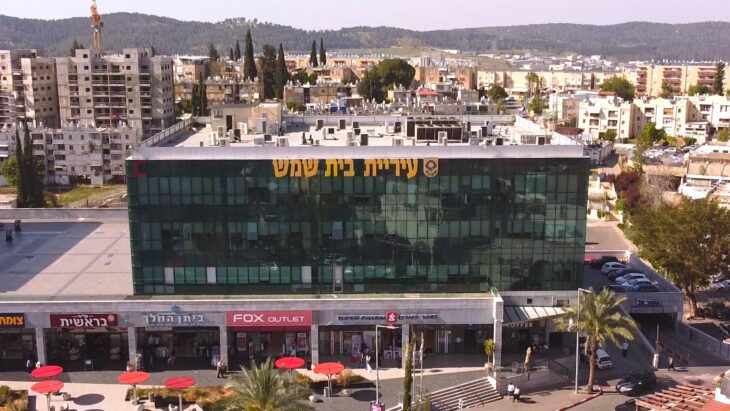
Dozens of objections have been filed against the Ministry of Housing’s plan to establish a new neighborhood on about 650 dunams in eastern Beit Shemesh, an area increasingly populated by the ultra-Orthodox. The plan includes 2,653 housing units, commercial and employment areas, and public buildings — but more than 80 objections have already been submitted. Residents of Moshav Zanua, on whose land the project partly sits, warn of the “suffocation” of their community by the city, while environmental experts claim the plan constitutes “harm to Israel’s food security” and erases the rural and agricultural character of the area.
By Dror Nir Castel, Nadlan Center
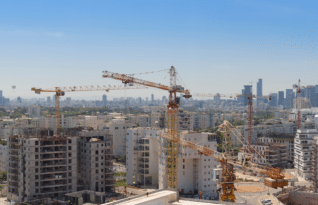
The Ministry of Housing’s plan to establish a new neighborhood — Neighborhood Vav — in eastern Beit Shemesh, spanning approximately 648 dunams, has sparked widespread opposition. The project spans the existing neighborhoods, the cemetery, Moshav Zanua, and Road 10, extending between the jurisdictions of Beit Shemesh Municipality and the Mateh Yehuda Regional Council. It calls for 2,653 housing units, 88,889 square meters of employment space, 11,730 square meters of commercial areas, and 244,335 square meters of public buildings.
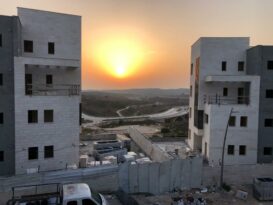
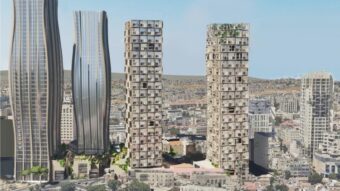
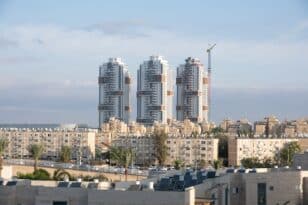
The buildings are planned to rise 9–12 stories, with one tower up to 18 stories, alongside a central commercial street, a connecting road network, and public open spaces. According to planning documents, the goal is to complete the city’s built-up continuum up to Route 3855 and strengthen the city’s eastern entrance.

Since its submission in June, more than 80 objections have been filed on behalf of thousands of residents, property owners, local authorities, and environmental groups. Among the opponents are Moshav Zanua, the Society for the Protection of Nature in Israel, KKL-JNF, the Israel Nature and Parks Authority, the Mateh Yehuda Regional Council, city council members, and over 1,500 citizens. They argue that the plan is not merely completing urban edges but instead represents a significant eastward expansion of Beit Shemesh, threatening Zanua, local agriculture, and forest areas.
Residents of Zanua claim the plan marks “a stage on the way to swallowing or suffocating the moshav by Beit Shemesh; creating intolerable traffic congestion via a connecting road that would channel Beit Shemesh residents through the moshav’s access road to Route 3855; destroying the special and active forest bordering the moshav to the north; wiping out nearby agriculture, devastating livelihoods, and demolishing agricultural buildings, including chicken coops with solar panels, vineyards, olive groves, and seasonal crops.”
Opponents argue the plan proposes “high-rise construction and public facilities adjacent to the rural landscape of Moshav Zanua, ignoring the principle of moderation and the gradual transition required between village and city.” They also note that it is being promoted without an approved master plan for Beit Shemesh, relying instead on non-statutory documents.
Harm to Israel’s food security
Environmental experts add their voices. Iris Hann, environmental planner and former CEO of the Society for the Protection of Nature, warns that the plan is being advanced “salami-style.” She says it disguises itself as a simple infill project but is in fact “the first step toward expanding Beit Shemesh beyond its natural boundary into new landscapes eastward toward the Jerusalem Hills.”
Hann stresses that the plan severely damages Zanua, “trampling its rural, communal, and agricultural character, erasing its identity, blocking its growth, and driving away its next generation.” She highlights national implications as well: “It wipes out active farmland, coops, and agricultural facilities, blocking future rural tourism and harming food security in Israel — a clear blow to national interests.”
KKL-JNF objects to the removal of about 200 dunams of forest for the neighborhood, warning that approval would set a dangerous precedent for additional forest loss on both sides of Route 3855.
We didn’t ask to turn Beit Shemesh into Bnei Brak
Even within the ultra-Orthodox community, opposition is rising. City Council member Tami Zusman, together with local Haredi residents, submitted an objection, saying: “We didn’t ask to turn Beit Shemesh into Bnei Brak. We chose Beit Shemesh to live in a well-planned, green Haredi city. Who decided that building for Haredim must come at the expense of nature? We never asked for that.”
Zusman added: “They’re converting public spaces into buildings, constructing over parks and breathing spaces. We want sane living conditions like everyone else — parks, lawns, nature, clean air, cleanliness, urban care, public transport, and infrastructure.”
Attorney Shahar Petel, representing the directly affected farms, argues that the plan seeks to change statutory land-use provisions, bypasses the district planning committee through the fast-track Vatmal committee, and undermines the very planning logic of the region. He stresses that Beit Shemesh has no approved master plan and that the program violates basic planning principles, property rights of farmers, and key ecological corridors.
In conclusion, Petel says: “Given the severe planning and legal flaws, combined with unprecedented public, municipal, and environmental opposition, the plan in its current form must be rejected outright.”
The battle over this land underscores the ongoing conflict between the housing and development needs of Beit Shemesh — one of Israel’s fastest-growing cities — and the preservation of traditional agricultural villages, green spaces, and active forests. As the city pushes eastward, residents, experts, and environmental groups warn of the irreversible loss of character, community, farmland, and natural landscapes.
Nadlan Center is Israel’s leading real estate news and knowledge platform in Hebrew, created for industry professionals. Founded by experts in the field, it delivers in-depth, up-to-date coverage on urban renewal, planning and construction, taxation, and housing policy — tailored to the needs of developers, investors, planners, and financiers. In addition to its widely read news content, Nadlan Center hosts major industry events, professional conferences, and training programs that support the growth and development of the Israeli real estate sector.
Learn more: https://www.nadlancenter.co.il