Following the ceasefire and the long-awaited return of all the hostages, Israel’s real estate market stands at a crossroads of healing and renewal. After two years of war, high interest rates, and severe labor shortages, cautious optimism is returning to a tired and traumatized nation ready to rebuild. As confidence strengthens, both local and overseas buyers are expected to reenter the market, drawn by emotional connection, economic opportunity, and the recognition that antisemitism abroad is not disappearing. Lower interest rates, a partial return of Palestinian manpower, and the enduring Israeli spirit of resilience together set the stage for a gradual but meaningful recovery in the months ahead.
As Israel awakens to a fragile calm following the ceasefire agreement signed last Thursday night and the long-awaited return of all hostages, the nation takes its first collective breath in two years. Across the country, exhaustion and grief mingle with relief and cautious optimism. For a tired and traumatized nation, rebuilding is not just an economic necessity; it is an emotional imperative. Among the many sectors that mirror this transition from survival to renewal, real estate stands at the forefront.
During the war years, the housing market absorbed the shocks of uncertainty, high interest rates, and acute labor shortages. Sales offices were empty, transactions fell, and developers faced mounting costs amid a crisis of confidence. Yet beneath the surface, the desire to secure a home in Israel — a place of permanence, safety, and belonging — never faded. Buyers were simply waiting for the moment when they could once again turn their attention to the task.
A Nation Rebuilding Confidence
Economic recovery depends on stability and confidence. For two years, many Israelis and overseas buyers held back, uncertain about the direction of the country and the economy. The ceasefire and the return of the hostages will start to ease that uncertainty.
For Diaspora Jews, the emotional connection to Israel has deepened during the war. The sight of Israeli strength and unity, the courage of soldiers and civilians alike, and the shared trauma of captivity and loss have reignited a powerful sense of belonging. And alongside that pride comes a darker realization — that antisemitism abroad, now louder and more unrestrained than at any time in recent memory, is not going away.

Across North America, Europe, and Australia, Jewish communities have faced intimidation, boycotts, and physical attacks. For many, the idea of owning a home in Israel is no longer only about vacationing or investment; it’s about security and continuity. The ceasefire may end the fighting, but it will not erase the hatred that has surfaced around the world, hatred that, over the past two years, has been allowed to spread openly, even encouraged and legitimized in public discourse. For many Jews abroad, this has been a sobering reminder that antisemitism is not a relic of the past, but a growing reality shaping where and how they choose to build their family’s future.
Interest Rate Cut Coming
One of the strongest forces shaping Israel’s housing market is the interest rate. After nearly two years at a high 4.5%, the Bank of Israel has been under growing pressure to begin easing monetary policy. Following the ceasefire agreement, industry leaders anticipate an initial interest rate cut in the near future, a move expected to lower mortgage costs, improve affordability, and encourage thousands of potential buyers who have been waiting for the right moment to reenter the market.
For developers, lower borrowing costs will reduce financing expenses, easing cash flow pressure and improving project profitability, helping bring the housing market back into a more natural rhythm of growth and renewal.
Labor Shortages and Renovation Costs
The construction industry in Israel has long depended very heavily on Palestinian workers, and the prolonged security restrictions since October 7 created a severe labor gap. As a result, building schedules have stretched and costs have soared. The shortage of skilled labor has also driven up renovation costs by an estimated 20–30%, leaving homeowners paying far more for kitchen upgrades, bathroom remodels, and full renovations.
Now, as calm returns, there is growing discussion about allowing Palestinian workers to reenter Israel’s construction sector under tighter security supervision. Many in the industry support a controlled reopening, recognizing the need for their skills and the stabilizing effect it could have on costs and project timelines.
At the same time, a large share of contractors remain cautious, emphasizing the lessons learned from recent years — that the sector must never again depend so heavily on a single labor source. The emerging consensus points to a balanced path forward: a diversified workforce that combines vetted Palestinian labor with expanded recruitment of foreign and Israeli workers, ensuring both security and resilience for the long term.
A Gradual Return of Demand
In the short term, the ceasefire is expected to trigger an uptick in activity. Many local buyers who delayed purchases during the war are likely to act, and developers will resume competitive marketing efforts with renewed confidence. Over time, the market is expected to return to full activity, with transaction volumes rising, the second-hand market reawakening, and home prices increasing.
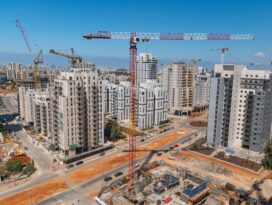
In practical terms, Israel’s construction boom should help prevent runaway price increases, but not eliminate them. The effect will likely be a more balanced market — one where new supply provides options and stability, while long-term growth in population, infrastructure, and national confidence continues to support home values.
Diaspora Demand Likely to Intensify Market Pressure
Foreign buyers are expected to play an increasingly important role in the months and years ahead. Many held back during the war due to uncertainty and the exceptionally high cost of flights, yet their long-term commitment to Israel has only deepened. With property prices still relatively stable and airlines gradually restoring routes, the post-war environment is likely to bring a noticeable rise in transactions among overseas buyers.
However, as confidence strengthens and the shekel continues to appreciate, Israeli real estate is becoming more expensive in foreign-currency terms — a trend that may actually prompt some buyers to act sooner rather than later, before the cost of waiting grows even higher.
The Spirit of Renewal
Real estate in Israel has always reflected more than market forces. It reflects the spirit of a people who build even after loss, who plant roots even in uncertainty, and who see home ownership not only as an investment but as an expression of resilience and security.
The ceasefire offers a fragile but vital turning point. The war reminded Israelis and Jews everywhere that safety, identity, and belonging are deeply intertwined. As the country heals, the Israeli real estate market stands as both symbol and substance of that recovery, a way to anchor hope in something tangible and enduring.
For some, it will mean rebuilding a home destroyed. For others, it will mean finally purchasing one after waiting. And for thousands more around the world, it will mean taking a step closer to the land that continues to embody the strength and future of the Jewish people.

Debbie Goldfischer is the founder and CEO of Buyitinisrael and the host of the Israel Real Estate Podcast: On The House. A prominent figure in real estate since 2004, Debbie has spent two decades helping foreign buyers successfully purchase homes in Israel. Seeing a lack of reliable, English-language resources for navigating the Israeli property market, she launched Buyitinisrael.com in 2020. In addition to leading the platform, Debbie is available to personally assist you in finding the right property—whether new or resale—anywhere in Israel.
To connect with Debbie, email [email protected].