By Nadlan Center Staff | November 4, 2025
The Jerusalem Municipality, through its Local Planning and Building Committee, has recommended that the District Committee approve four urban renewal plans and one new construction plan. Together, they include approximately 1,700 new housing units in the neighborhoods of Old Katamon, Derech Chevron, Pat, Pisgat Ze’ev and Kiryat Moshe. The plans integrate modern public buildings, active commercial frontages, employment areas, and open public spaces.
Pisgat Ze’ev: 870 New Apartments
One of the largest plans recommended for deposit involves urban renewal over an area of about 12 dunams, bounded by Hahalutz Air Force Street, Chaim Laskov Street, and Jerusalem Brigade Street. The plan, submitted by Omer and Tnufa Pisgat Ze’ev and designed by Pros Architects, proposes demolishing ten old 4–5-story residential buildings and replacing them with nine new residential towers of up to 30 stories, comprising about 870 apartments.
In addition, the project includes roughly 3,200 square meters of commercial and employment space, 1,050 square meters for public buildings, and about 6,200 square meters designated for cultural, welfare, educational, community, and religious uses. The plan incorporates open spaces, pedestrian bridges connecting three complexes across the streets, and a cohesive, integrated public environment—part of a broader neighborhood renewal.

Kiryat Moshe: 382 New Apartments
The committee also recommended depositing a plan for the area bordered by Baron Hirsch Street, Herzl Boulevard, and Shoshana Polyakov Street, spanning about five dunams. The plan, submitted by private developers and designed by Ian Bader Architects, includes the demolition of six existing residential buildings and the construction of three new ones—two towers of 39 stories and one six-story building—with a total of 382 apartments.
The plan provides approximately 3,330 square meters of commercial and public-use space. The project will feature an active commercial frontage along the light rail route on Herzl Boulevard, a pedestrian passage connecting Shoshana Polyakov Street to Herzl Boulevard, open courtyards, and public areas. This development aims to enhance walkability from the neighborhood to the light rail line and enrich the surrounding urban space.
Pat: 200 New Apartments
The committee also recommended submitting an urban renewal plan for the area between Aryeh Bahem Street and Dov Yosef Boulevard, covering approximately 4 dunams. The plan, submitted by S. Ben Tovim Projects and Partners and designed by Geo Ben Gur Architects, includes the demolition of two old four-story buildings containing 32 apartments and the construction of two new mixed-use towers—18 and 30 stories high—with 200 apartments, commercial, and employment areas, located near the Dov Yosef light rail station.
Since the plot is relatively small for two high-density buildings, the local committee recommends constructing a single residential building with six apartments per floor above a base level of commercial space, and three floors for employment. The plan also includes connecting Aryeh Bahem Street to Dov Yosef Boulevard and providing solutions for security, infrastructure, and accessibility improvements.
Old Katamon: 93 New Apartments
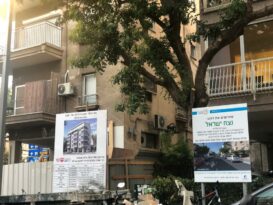
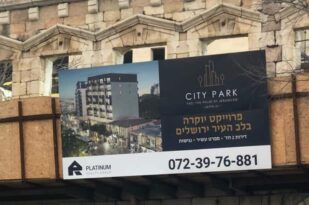
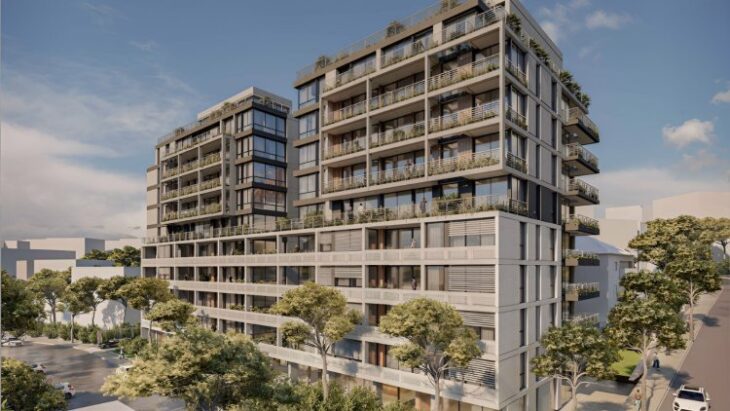
The local committee also recommended approval of a validation plan for a renewal project at 28 Kaf-Tet B’November Street, covering approximately 2.4 dunams. The plan, submitted by Beit Yerushalmi and designed by Pros Architects, includes demolishing an old 4-story “railway” building with 40 apartments and constructing a new 10-story residential building with two wings, totaling 93 apartments.
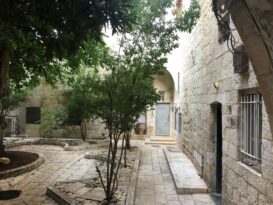
The plan preserves the main historical façade, includes built public space for social, community, cultural, and recreational purposes, and allocates an area for commercial use. Located within Jerusalem’s historical core, the project revitalizes the area’s historic urban fabric while adding vital community services.
Derech Chevron: 112 New Apartments
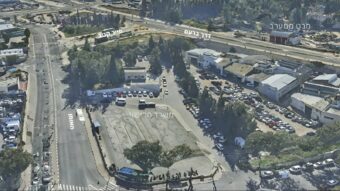
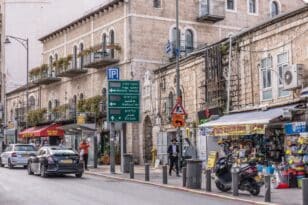
The committee also recommended submitting a new construction plan for the intersection of Derech Chevron and HaOman Streets, covering approximately 4.2 dunams and adjacent to the future light rail line. The plan, submitted by Rami Levy Hashikma Marketing and Shevach Jerusalem and designed by Aharonson Architects, proposes converting an office building into a 30-story residential tower for long-term rental, including 112 rental apartments for a 15-year period, along with employment, commercial, and public spaces.
The project will feature an active commercial frontage facing the southern square, a designated floor for municipal offices, and active façades. It forms part of the broader vision for the renewal of the Derech Chevron corridor and the future light rail line, expanding the supply of rental housing in an area rich with ongoing development plans.
Mayor Moshe Lion: “Urban Renewal Is the Beating Heart of Jerusalem”
“Jerusalem’s housing revolution beats at full strength through its heart—urban renewal—which is transforming streets, neighborhoods, and communities. Urban renewal brings with it social, economic, and environmental justice. I am proud that we are leading this field in Israel while preserving the historical and unique character of our capital city.”
Jerusalem Mayor Moshe Lion stated:
Nadlan Center is Israel’s leading real estate news and knowledge platform in Hebrew, created for industry professionals. Founded by experts in the field, it delivers in-depth, up-to-date coverage on urban renewal, planning and construction, taxation, and housing policy — tailored to the needs of developers, investors, planners, and financiers. In addition to its widely read news content, Nadlan Center hosts major industry events, professional conferences, and training programs that support the growth and development of the Israeli real estate sector.
Learn more: https://www.nadlancenter.co.il