Israelis go to the polls today with the property market in a holding pattern: prices drifting lower, rents climbing, a record number of new apartments sitting unsold and buyers waiting for a signal. The parties have put forward very different ideas on housing, from a million-shekel benefit for reservists to 40 new communities in the Negev and Galilee. For buyers in Israel and abroad, the next few months may matter more than the result itself.
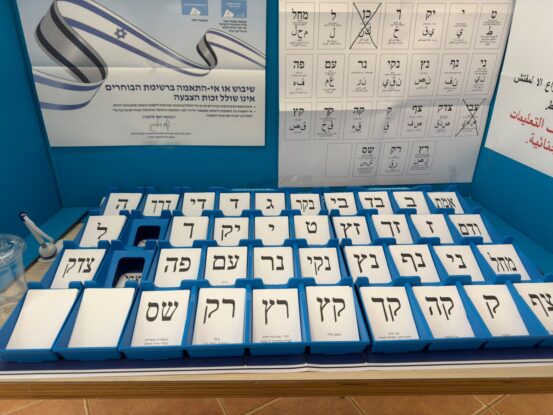
Today, October 27, 2026, is Election Day, and Israelis are choosing the 26th Knesset. Official results are due to be confirmed on November 4, and whatever the numbers show tonight, building a coalition is likely to take weeks, possibly longer. For anyone watching the Israel housing market from New York, London, Paris or Johannesburg, the obvious question is whether the vote will impact home prices. The more useful questions are what kind of market the new government will inherit, which policies are on the table, and how an overseas buyer should approach the coming months.
A Market That Was Already Waiting
The election didn’t create today’s slowdown in the Israel housing market, but the run-up to Election Day gave many buyers a reason to stay put. According to the Bank of Israel, home prices fell 0.6% in July–August and are down 1.8% over the past twelve months. Globes calculates the decline from the early-2025 peak at about 3.3%, or close to NIS 80,000 on an average apartment, which takes prices back to roughly where they were in mid-2024. Five of the last eight price index readings have been negative.
Supply is the other half of the picture. Central Bureau of Statistics data released in mid-October showed 85,682 new apartments unsold at the end of August. At the current pace of sales, that’s about 26.7 months of inventory, and the stock has grown by an average of around 1.2% a month since spring 2022. Almost a third of those unsold units are in the Tel Aviv district and another quarter are in the Central district. Jerusalem and Tel Aviv-Yafo each have close to 10,000 unsold new homes.

Rents are moving the other way. The rent index rose 0.4% in September, even though overall consumer prices fell that month. Tenants who signed new leases paid about 5.2% more than the people before them, and rents are up nearly 4% over the year. Many Israelis who would normally buy are renting while they wait, and that keeps pushing rents up.
Investors have noticed. The Tel Aviv Construction index, which tracks listed developers and builders, has fallen about 31% from its March 2026 peak, according to TheMarker. Developers have responded with flexible payment schemes and financing incentives to bring buyers back.
Interest Rates on Hold Until After the Vote
Interest rates have been the biggest factor in the Israel housing market over the past three years. On October 21, less than a week before Election Day, the Bank of Israel kept its benchmark rate at 3.25%, pausing a cycle of cuts. Annual inflation was 1.6% in September, slightly below the middle of the target range. The central bank expects strong economic growth next year, but it still describes uncertainty as high, pointing to geopolitical tensions, the fiscal picture and the defense budget.
The next rate decision is due on November 23, when coalition talks may still be going on. A clear result, a stable government and a credible budget would make further cuts easier to justify. A long period of political uncertainty, or another round of elections, would make that harder. For buyers who rely on a mortgage, each quarter-point matters. On a loan of NIS 1 million, a 0.25% cut saves roughly NIS 150 a month.
Two Very Different Housing Agendas
Housing barely featured in the campaign, and several parties never published detailed plans. Still, between published platforms and the record of the outgoing ministers, the two camps have very different approaches.
The outgoing coalition’s record is about the periphery, reservists, and settlement. Under Housing Minister Yitzhak Goldknopf (United Torah Judaism), the maximum land discount for first-time buyers in national priority areas doubled from NIS 450,000 to NIS 900,000. Haim Katz (Likud) took over the ministry in 2025, and discounted Mechir Matara lotteries have since been limited to the periphery, with at least half the units set aside for reserve soldiers. Bezalel Smotrich’s Religious Zionist list is running on a plan for 40 new communities split between the Negev and the Galilee. The plan aims to draw a million more Jewish residents to those regions through housing incentives for young families, reservists, professionals and new immigrants.
The coalition’s record also has a weak spot. The Israel Land Authority, which runs most state land tenders, spent much of the past year without stable leadership, and the High Court overturned the appointment of a permanent director. According to Yesodot Group data, results were published for only 99 building sites in the first half of 2026. That’s down from 268 a year earlier and 743 in the first half of 2022. Fewer land sales now mean fewer homes three to five years from now.
The opposition parties focus more on rentals, planning reform and faster construction. Together, the joint list of Naftali Bennett and Yair Lapid promises 100,000 long-term rental apartments within a decade, 40,000 of them priced about 30% below market. It also offers a benefit worth NIS 1 million to active reservists buying a first home or upgrading. Its other proposals include cutting urban renewal timelines from more than a decade to about five years and allowing private recruitment of foreign construction workers on seven-year visas. Gadi Eisenkot’s Yashar wants a national planning cabinet and would judge housing policy by building permits issued and homes actually occupied, not by plans approved on paper. It would also stop tenants paying agent fees for a service the landlord ordered. The Democrats would sell state land cheaply in return for affordable housing and require public housing in every new neighborhood.
Both camps want to move more people to the Galilee and the Negev, offer more for reservists and fix a planning system that most agree is too slow. That overlap matters, because whoever forms the government is likely to keep incentives for those who serve and keep pushing development outside the center.
The Day After the Ballots are Counted
Analysts have been split on the election’s likely effect on prices since the summer, and both sides have a reasonable argument.
The case for a pickup goes like this. Many buyers have put off decisions until after Election Day, and pent-up demand could return quickly once the uncertainty clears. A government that steadies the mood could slow the departure of Israelis abroad and bring some back, and even a few thousand returning families could tighten the market in the center. A lower risk premium would also give the Bank of Israel more room to cut.
The case for continued weakness rests mainly on inventory. With roughly two years of unsold new homes, developers can absorb a rise in demand for some time before raising prices. More deals would likely come first and higher prices later. Affordability is also stretched, and forming a government could freeze planning committees, land tenders and infrastructure budgets for months. Over time, though, that freeze points the other way. Fewer tenders and fewer project launches today reduce supply later in the decade.
The likeliest result is a market that stays slow through the coalition talks, with more activity once a government is sworn in and a budget is passed. A sharp jump in prices looks unlikely. A long slide is unlikely too, as long as the land shortage stays unresolved.
Governments Change, the Fundamentals Don’t
Election Day comes around often in Israel, and governments change frequently. The long-term basics, including a growing population, steady aliyah, and limited land, stay the same. The Israel housing market has gone through wars, rate shocks, and repeated elections without changing that underlying picture. Whoever forms the next government, the gap between people who want to live in Israel and the homes being built for them is unlikely to close soon.
The Buyitinisrael Editorial team is made up of industry experts, journalists, researchers, editors, and translators working together to deliver reliable, up-to-date information about the Israeli property market — all in English. With a strong focus on transparency and accessibility, our goal is to empower English-speaking buyers by helping them understand the market and navigate the real estate process with clarity and confidence.
For inquiries, email [email protected].