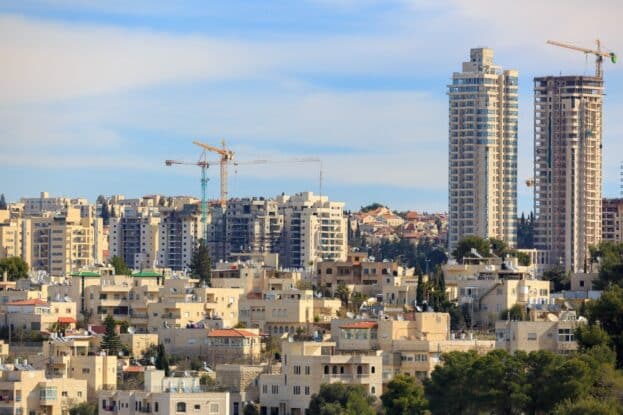
Israel apartment sales rose 8.1% year over year this summer, to about 24,200 transactions, which confirms the market turned a corner in January. Underneath the headline, it is a split market. New-build sales jumped by a quarter, driven by government-subsidized programs and a strong return of developer financing deals. Resale activity has stalled, and open-market volumes in August were among the weakest in two decades. Nearly 86,000 new apartments are still unsold. For buyers, the mix of motivated developers, cautious owners, and heavy supply creates real openings, along with pitfalls worth understanding before moving forward.
For most of the past two years, each new data release told the same story: a market losing steam. That story has changed. The Central Bureau of Statistics release published yesterday (October 14), covering June through August 2026, shows Israel apartment sales recovering. About 24,200 homes changed hands, up 8.1% on the same period last year and 8.5% after seasonal adjustment.
The longer trend makes the shift clearer. Between mid-2023 and mid-2024, sales climbed by about 2.6% a month. From June 2024 to December 2025, they slid by about 0.8% a month. Since January 2026, the trend has mostly pointed upward again, by roughly 0.4% a month. It is a gentle turn, but it is a turn.
Two Markets Moving in Opposite Directions
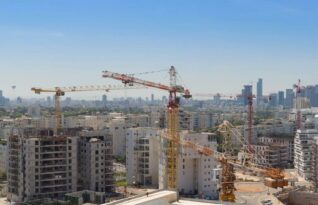
The clearest message in the new data is that Israel apartment sales in new construction and resale have stopped moving together. About 10,110 new apartments sold over the three summer months, 41.8% of all deals. That is 24.9% more than a year earlier and 11.6% more than in the spring. In August alone, new homes made up 45% of all sales. New-build sales fell by about 1.7% a month from mid-2024 through 2025, reversed in January, and have grown by about 1.8% a month since.

Resale apartments went the other way. About 14,090 changed hands, down 1.4% from last summer. After seasonal adjustment, the gap is just as stark: new sales were up 24.6% year over year, while resale was down 0.8%.
The resale market has been on a roller coaster. From September 2023 to November 2024, resale volumes grew by an average of about 2.9% a month. They then fell by about 1.7% a month until September 2025, recovered modestly at about 0.6% a month through March 2026, and have been sliding again since April, by about 1.5% a month.
The Finance Ministry’s figures for August alone tell the same story. Resale purchases fell to 4,170 apartments, down 7% on last year and 12% from July. Developer sales rose to 3,362, up 6% year over year and 13% from July.
Developers Are Competing Hard for Every Buyer
A big reason for the gap is that developer financing promotions are back. About a year and a half ago, the Bank of Israel restricted the financing incentives developers could offer buyers. For a while, the restrictions worked. By May 2026, only 20% of open-market deals in the five areas tracked by the Finance Ministry’s Chief Economist included a financing benefit. That was the lowest level since at least November 2024. Then the share started climbing again, and by August it had reached 30%, a ten-point jump in three months.
How Strong Is the Recovery Really?
There is a catch, and every serious buyer should understand it. First, the season flatters the numbers. After seasonal adjustment, summer sales were actually 2.9% lower than in the spring. New sales were down 5.5% and resale down 1%. The year-over-year rise is real, but the momentum is more modest than the raw figures suggest.
Second, subsidies are doing much of the work. About 35.8% of new apartments sold this summer, roughly 3,620 units, went through government-subsidized programs such as Target Price (Mechir Matara). Excluding those, only about 6,490 new homes sold on the open market over three months. In August, the subsidized share rose to 38.9%. (Subsidized programs are generally limited to Israeli citizens who don’t own a home, so a buyer still living overseas competes only in the open-market slice, which is far smaller than the headline suggests.)
The Finance Ministry’s monthly review uses its own methodology but points the same way. It counted about 6,240 open-market sales of new and resale homes in August. By its analysis, that is one of the weakest Augusts since the early 2000s. Only the Second Intifada years of 2002–2003 and the 2011 social-protest summer were lower.
Who Is Buying, and Who Isn’t
The ministry’s data also shows who is driving the market. First-time buyers were the only segment that grew in August. They bought 4,839 apartments, up 12% on last year, or 3,549 excluding subsidized deals. Upgraders, homeowners buying a new home to replace their current one, pulled back sharply, with purchases down 27%. Because upgraders are often sellers as well as buyers, their retreat helps explain the stalled resale market.
One trend stands out within that group. Downsizers, homeowners trading down to something smaller, made up 29% of upgrader purchases in August, up six points from a year earlier. This is a useful signal: smaller, well-located apartments are increasingly in demand, which can support their resale value down the line.
What about Foreign Buyers?
Investors bought 1,077 apartments in August, just 14% of all deals and 2% fewer than a year earlier. Foreign residents are counted in this group, but they are a small part of it. According to the Finance Ministry, about half of all purchases by foreign residents in August, roughly 60 apartments, were in Jerusalem, which suggests only around 120 nationwide. So, despite years of talk about a wave of diaspora buying, overseas purchasers remain a small share of the market.
The Inventory Number That Should Shape Your Strategy
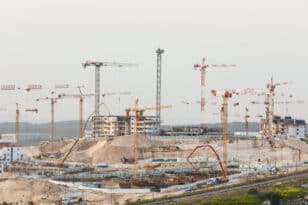
If one number deserves your attention, it is unsold inventory. At the end of August, about 85,680 new apartments were still waiting for buyers. At the current pace of Israel apartment sales, clearing that stock would take an estimated 26.7 months. That inventory has grown steadily, by an average of 1.2% a month since April 2022. The Tel Aviv district holds about 26,330 unsold units, close to 31% of the national total, and the Central district holds about 21,190.
Among the major cities, Jerusalem has the largest pool at about 10,250, followed by Tel Aviv-Yafo at about 9,820. Next come Bat Yam (about 4,990), Haifa (3,970), Ramat Gan (3,730) and Netanya (3,320). Smaller cities hold significant stock as well, including Lod (about 3,010), Kiryat Gat (2,930), Ramat HaSharon (1,490) and Ra’anana (1,440).
For buyers, this is leverage. Developers holding finished or nearly finished units pay for every month those units sit empty. That is exactly why financing promotions are returning, and it is when upgrade packages and price flexibility start to appear.
Jerusalem and Beit Shemesh: A Regional Shift
For many families making aliyah out of Zionist conviction, religious commitment or a growing sense that Jewish life abroad is less secure, Jerusalem is the first and often the only city on the list. The summer data shows a capital pulling in two directions.
New-build sales within Jerusalem city fell to 400 units, down 25.4% from the spring, and the city holds the largest unsold inventory in the country. A simple calculation shows that at this summer’s pace, Jerusalem’s current stock would last well over five years. That is a rough estimate, since the inventory includes projects at very different stages, but the direction is clear.
The wider region tells a different story. New-build sales across the Jerusalem district rose 12.1% to 741 units. Beit Shemesh, home to one of Israel’s largest English-speaking communities, drove much of that growth, with new-apartment sales more than doubling from 89 to 208. Families who want an Anglo community within reach of Jerusalem at a lower price point are clearly acting on it.
Jerusalem’s resale market is holding firm. The city led the country in second-hand deals with 898 sales, up 3.8%. Established neighborhoods with synagogues, schools and English-speaking communities keep attracting buyers, and their owners are under little pressure to cut prices.
Where the Surprises Are
Kiryat Gat led the country in new-apartment sales with 1,044 units, more than triple the spring figure. According to the Finance Ministry, though, most of the sales came from Target Price projects, and fewer than 200 were open-market. Across the wider South district (excluding Ashdod), open-market new-build sales are down 23% so far this year.
The north is the quieter success story. The Haifa area led the country in open-market developer sales in August, with 379 apartments, up 40%. Akko also saw strong activity, linked to a promotion at one project where apartments averaged about NIS 1.4 million. Elsewhere, Herzliya sold 212 new apartments, up from 60, and Petah Tikva rose about 66% to 424. Far to the south, Eilat’s new-build sales more than tripled, from 47 to 151.
Even in a weak resale market, a few cities bucked the trend, particularly, cities popular with Anglo buyers: Resale deals in Modi’in rose 9.6% to 228, and in fast-growing Harish they jumped 41.6% to 218. Compared with the spring, Be’er Sheva’s resale deals rose 23% to 701, and Tel Aviv-Yafo’s rose 20% to 533. In Judea and Samaria, while new-build sales fell 12.9%, resale deals rose 8.4%.
Netanya: Less of a Surprise
Netanya, long a favorite of French olim and English-speaking retirees, is a textbook case of developers winning. New-build sales there more than doubled this summer, from 113 to 250, while resale stayed flat at 367.
This week, rental-housing company Abu Family Residential, controlled by Tzachi Abu, agreed to buy 50 apartments in Netanya from Azorim for about NIS 120 million including VAT, roughly NIS 2.4 million per unit. Bulk deals are typically negotiated at a discount, but they show that professional investors are betting on long-term rental demand.
The Bottom Line
Israel’s housing market is neither overheating nor collapsing. It is recovering unevenly, driven by subsidized programs, returning developer incentives, and a large stock of unsold homes, while resale owners mostly hold their ground.
For Jewish families abroad who are seriously considering coming home, whether out of love for Israel, hope for their children’s future, or growing unease about antisemitism where they live now, this market rewards preparation. Israel apartment sales are rising again, and buyers who understand the gap between the headlines and the details will secure the best terms. The next CBS update, due November 12, will show whether the recovery holds into the autumn.
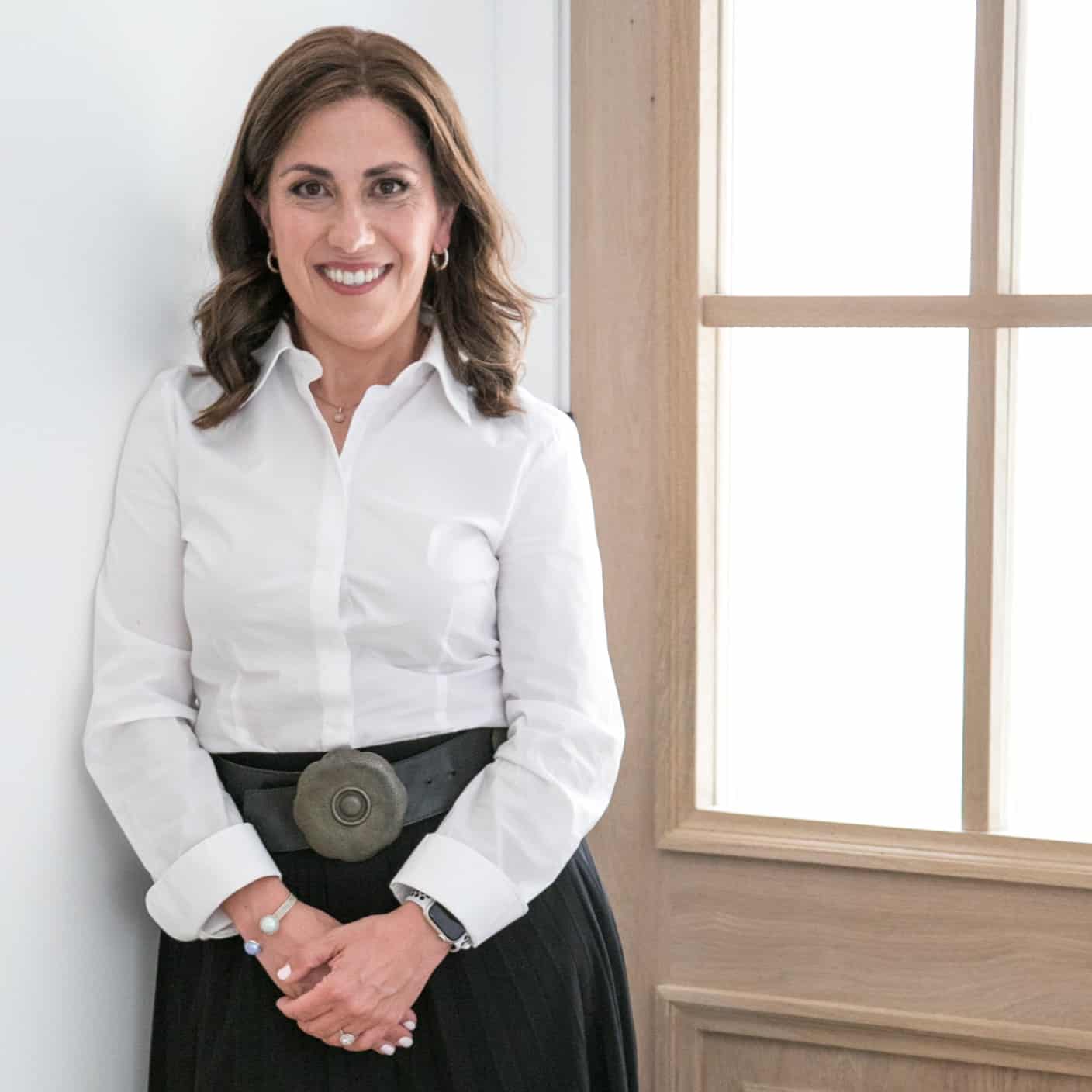
Debbie Goldfischer is the founder and CEO of Buyitinisrael and the host of the Israel Real Estate Podcast: On The House. A prominent figure in real estate since 2004, Debbie has spent two decades helping foreign buyers successfully purchase homes in Israel. Seeing a lack of reliable, English-language resources for navigating the Israeli property market, she launched Buyitinisrael.com in 2020. In addition to leading the platform, Debbie is available to personally assist you in finding the right property—whether new or resale—anywhere in Israel.
To connect with Debbie, email [email protected].