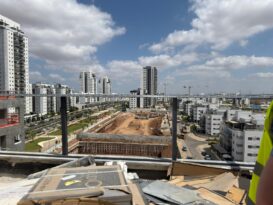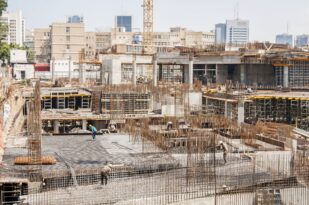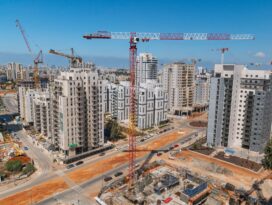
Israel’s housing market is under real strain. Construction starts are falling, apartments are going unsold, and tax revenue from real estate is shrinking. That pressure has reopened a question many foreign buyers have been asking for years: will the government cut the 8% purchase tax on investors? This week, the head of the Israel Tax Authority acknowledged that a temporary cut would stimulate demand and said emergency steps are available if the crisis deepens.
The question of whether Israel will ease the tax burden on investors and foreign buyers moved to center stage this week. Earlier today (Thursday), Israel Tax Authority Director Shai Aharonovitz addressed the issue at a real estate conference held by the Tel Aviv and Central District Builders Association, where industry leaders presented data on a sharp slowdown in construction and sales, as reported by TheMarker. On the same day, Maariv reported that at the Taxes and Business 2027 conference hosted by Fahn Kanne Grant Thornton and S. Horowitz, former minister Ayelet Shaked, one of the architects of the current high rate, said publicly that it is no longer justified. Together, the two events signaled that a purchase tax cut, which seemed off the table a year ago, could become part of the policy conversation.
This matters a great deal to buyers abroad. Purchase tax, or Mas Rechisha, is usually the highest cost after the price of the apartment itself. Under Israeli tax law, foreign residents are classified as investors even when they buy just one home. A buyer from abroad buying their only apartment in Israel pays the same rate as an Israeli resident buying an investment unit: 8% on the bulk of the price, and 10% on the upper tier of high-value deals.
The Door to Relief Is Open
Aharonovitz did not dismiss the idea of relief. He acknowledged that reducing the investor rate to 3.5%, particularly as a temporary measure, would likely generate demand. He also pointed to a precedent from the last major downturn in the early 2000s, when buyers who purchased in 2001 and 2002 later received capital gains tax relief on resale, alongside purchase tax concessions.

His position is that the market has not yet reached that level of crisis. However, he said that if conditions continue to deteriorate over the coming months, the state is prepared to introduce emergency measures, just as it raised the tax when it judged that necessary. He also stressed that keeping contractors on their feet is a priority, since Israel’s growing population needs a functioning construction industry. For foreign buyers, this is a notable change in tone. Official messaging used to focus on keeping investors out. Now, the head of the Tax Authority is acknowledging a potential purchase tax cut as a tool available if the market worsens.
A Market Under Real Strain
The numbers presented at the builders’ conference explain why the conversation has changed. Amit Gottlieb, chairman of the association, reported about 80,000 construction starts in 2025. In the second quarter of 2026, however, starts totaled only about 18,000 apartments, a 9% drop from both the previous quarter and the same period a year earlier, and he expects a further decline in the third quarter. Urban renewal, a major source of new housing in central cities, is falling even faster, with starts down 25% year over year. Gottlieb said that talks with government officials produced an estimate that about 80% of urban renewal projects currently being advanced are not economically viable.
The slowdown is also showing up in state revenue. According to Aharonovitz, the residential market generates just under NIS 20 billion in taxes in a good year. This year, fewer apartment sales are reducing not only purchase tax receipts but also VAT and income tax collection. Weaker revenue from real estate is exactly the kind of pressure that can push a government toward encouraging transactions.
Growing Voices for a Purchase Tax Cut
Calls for relief are coming from several directions. At the builders’ conference, developer David Peretz of Yahalomit Peretz urged the government to sharply lower the investor rate for a limited period. At the Fahn Kanne conference, Shaked made a notable reversal. She was one of the ministers behind the 2021 increase to 8% and later supported extending it, but she now argues that its original goals, pushing investors out and halting price growth, no longer justify it.
Shaked noted that attractive alternatives in the capital market are drawing money away from property, and that a lower rate could bring back Israeli investors who have been buying in Cyprus, Greece and elsewhere. She tied this to the cost crisis in construction, saying the employer cost of a foreign construction worker now reaches NIS 32,000 to 35,000 a month. When developers struggle to make projects work, and buyers are holding back, removing a barrier to purchases becomes a more attractive policy option.
Why Relief Is Not Imminent
Aharonovitz stressed that housing policy is for the government to set, not the Tax Authority, and said the Housing Ministry and most of his Finance Ministry colleagues currently favor keeping the investor rates at 8% and 10%. At the same time, he noted that just as the state raised the purchase tax when the market needed cooling, it would know how to lower it if that is what the government decides.
The fiscal picture is tight as well. Aharonovitz said the defense budget will not shrink in the next year or two, whatever government is formed, and that the defense establishment has already spent about 20% more than its approved budget. He estimated that the state will need an additional NIS 30 to 40 billion a year in revenue and does not expect tax cuts in 2027.
Politics complicates the timing further. The temporary order setting the 8% rate, which the Knesset Finance Committee had extended until the end of 2026, was due to expire, with brackets falling back to 5% and 6%. Because of the recent election, however, Section 38 of Basic Law: The Knesset keeps the 8% rate in force until February 10. According to the Tax Authority’s legal opinion, another round of elections would extend it by roughly three to four more months. In practice, any lasting decision will likely be made by the next government.
What a Cut Would Mean in Practice
The stakes are significant. Consider a foreign buyer purchasing a NIS 3.5 million apartment, well within the range many overseas families consider in Israel. At today’s 8% rate, purchase tax would be about NIS 280,000, while a 3.5% rate would mean NIS 122,500, a substantial saving of NIS 157,500.
It is important to be clear that no cut has been approved or formally put forward by the government, and the 8% rate still applies. Having said that, tax relief is possible, but waiting for it has its own costs. Developers are competing for buyers with flexible payment plans, long deferrals, and discounts. If a purchase tax cut is announced, demand could return, and those incentives could disappear, so buyers who wait for a lower rate may end up paying a higher price.
For anyone planning aliyah, the investor rate may not apply at all. New immigrants are entitled to a reduced purchase tax rate on one residential property bought within seven years after making aliyah, or up to twelve months before. For many families, timing the purchase around their aliyah date will save more than any policy change. Before signing, run the numbers through our Purchase Tax Calculator and consult an Israeli real estate lawyer about your status.
The Buyitinisrael Editorial team is made up of industry experts, journalists, researchers, editors, and translators working together to deliver reliable, up-to-date information about the Israeli property market — all in English. With a strong focus on transparency and accessibility, our goal is to empower English-speaking buyers by helping them understand the market and navigate the real estate process with clarity and confidence.
For inquiries, email [email protected].