Following the end of the war and the anticipated return of demand for housing, Israel faces a growing supply crisis that could soon explode in buyers’ faces. The ceasefire opens the door to renewed attention — and funding — for rebuilding and revitalizing the periphery. But what about the proposed law to rehabilitate the destruction left by “Operation Rising Lion”? After two years of war, these are the most pressing housing issues now waiting on the government’s desk.
By Nimrod Buso, Nadlan Center
The familiar Israeli phrase “acharei chagim” (after the holidays), symbolizing a return to normal life, takes on new meaning in October 2025. This year’s unusually long holiday season was capped by the historic event marking the end of the Israel-Hamas war, after more than two bloody years. If President Trump’s peace plan is indeed implemented, the coming weeks will bring not only a return to post-holiday work routines but also a gradual transition to a peacetime economy.
This return is, of course, welcome news for much of the public and has overall positive economic implications. But in the housing sector — where the current government has shown limited interest and only moderate execution (to put it politely) — the return to normalcy could create new and urgent challenges that, if ignored, may eventually blow up in the faces of Israeli citizens.

As Demand Rises, a Supply Crisis Looms
The first half of 2025 saw exceptionally low housing demand, with home purchase volumes roughly 30–40% below 2024 levels — and even that year was no great success. The reasons were clear: high interest rates, hundreds of thousands of reservists called up for service, and a generally depressed national mood.
This slump in demand pushed the number of unsold apartments to an all-time high — nearly 80,000 units. Yet alongside the drop in demand, an equally worrying trend has emerged: a historic low in land tender activity. Ongoing disputes between the Ministry of Finance on one side, and the Israel Land Authority (ILA) and the Ministry of Construction and Housing on the other, have led to a near-freeze in residential land tenders during the first seven months of the year. The disagreements mainly center around the “Discounted Apartment” program and other inter-ministerial power struggles.
Moreover, even “umbrella agreements” ceremoniously signed in recent years — intended to deliver tens of thousands of new homes — have yet to take effect due to bureaucratic friction and lack of coordination. A recently approved NIS 1.3 billion allocation for development work in housing projects has also not yet been released.
The cumulative effect of these failures is likely to result in a significant housing shortage in the coming years. These are structural issues whose impact is not felt immediately but rather within 2 to 3 years — or even longer. Just as today’s relatively high supply stems from proactive policies of previous governments that advanced land marketing and removed barriers, so too will the current paralysis be felt down the line.
Meanwhile, demand is not waiting. The end of the war is widely expected to trigger interest rate cuts and renewed buying momentum. While there is currently enough inventory to absorb the initial surge in demand — mainly in central Israel — the government’s implementation arms must act swiftly. Otherwise, Israel could soon return to an era of rapidly rising prices.
No Progress in the Periphery
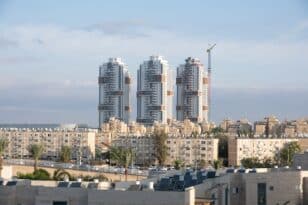
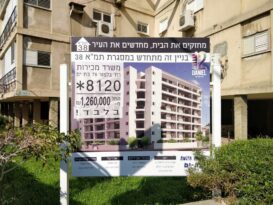
The second challenge facing the government predates October 7, 2023 — urban renewal and fortification of the periphery. Although recent years have seen growing numbers of renewal projects in cities such as Hadera, Beit Shemesh, Ramla, Tirat Carmel, and Kiryat Malachi, the country’s distant border regions — along the Syrian-African Rift and near Lebanon and Gaza — still show negligible figures.
The solution is well known: heavy financial subsidies, totaling billions of shekels. However, the vast resources already devoted to financing the war have greatly reduced the likelihood that such funds would be allocated. Still, with the war now over, there is hope that significant budgets may finally be directed toward this long-overdue national priority.
Adding to the stagnation, the Government Authority for Urban Renewal has been operating for six months without a permanent director. The role is crucial, as the director is the one who drives interagency coordination and ensures implementation. The tender for the position was published at the end of August, and a new appointment is expected in the coming weeks.
Will the New Rehabilitation Law Advance?
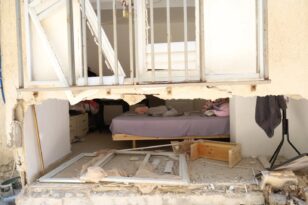
Amid the chaos of recent years, it’s easy to forget that just two or three months ago, the most talked-about issue in the real estate sector was the proposed law for the rapid reconstruction of urban areas destroyed during “Operation Rising Lion.”
After several delays, the draft legislation was released for public comment in September and is expected to move forward in the Knesset session opening next week. The law will directly impact owners of hundreds of homes that were destroyed or damaged during the war, but its implications extend far beyond — introducing groundbreaking legislative tools to accelerate urban renewal, such as the “buyout” model. If successful, these mechanisms could later be adopted into standard urban renewal processes.
Given Israel’s ongoing political instability and the potential for early elections, it remains to be seen whether the law will pass. If it stalls, affected homeowners may face years of displacement. One can only hope that lawmakers will muster the will — and the votes — to push this vital reform forward.

Nadlan Center is Israel’s leading real estate news and knowledge platform in Hebrew, created for industry professionals. Founded by experts in the field, it delivers in-depth, up-to-date coverage on urban renewal, planning and construction, taxation, and housing policy — tailored to the needs of developers, investors, planners, and financiers. In addition to its widely read news content, Nadlan Center hosts major industry events, professional conferences, and training programs that support the growth and development of the Israeli real estate sector.
Learn more: https://www.nadlancenter.co.il