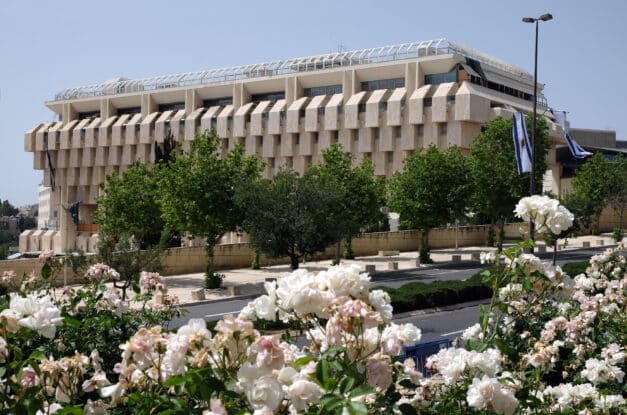
Contrary to the forecasts of most analysts, the Bank of Israel has once again decided to cut the interest rate by a quarter of a percentage point, from 4.25% to 4%. The move is explained, among other factors, by a moderating inflation environment, a strengthening shekel, and continued economic expansion. Regarding the construction sector, the Bank noted: “The level of activity remains high, and the annual pace of housing starts has continued to increase.”
By Li Saadon, Nadlan Center
The Monetary Committee of the Bank of Israel decided today (Monday), for the second consecutive time, to reduce the interest rate by 0.25%, bringing it to 4%. Among the reasons cited for the move are the strengthening of the shekel, continued economic expansion, and an increase in the pace of housing starts. These two consecutive rate cuts come after 13 decisions in which the interest rate remained unchanged. The decision came as a surprise, as most analysts had expected the rate to remain unchanged following the previous increase.
In its explanation of the decision, the Bank of Israel cited, among other factors, a moderating inflation environment. “The Consumer Price Index declined by 0.5% in November, and annual inflation stands at 2.4%. Forecasters expect a certain increase in the annual inflation rate in the December index, after which it is expected to return to around the midpoint of the target range,” the Bank stated.

The explanation also noted that since the previous interest rate decision, the shekel has strengthened by 3.1% against the dollar and by 1.5% against the euro. In nominal effective terms, the shekel appreciated by 2.2%. “The labor market remains tight, but there are indications at the margin of easing supply constraints. This is reflected in rising participation and employment rates, a decline in the share of absentees due to reserve military service, and a slowdown in the pace of wage increases in the business sector,” the statement said.
It was further noted that current indicators of economic activity point to continued expansion. Data on credit card expenditures indicate continued growth in the fourth quarter, hovering around the trend line. Regarding the construction sector, the Bank of Israel wrote that activity remains high and that the annual pace of housing starts has continued to rise. “In October, housing prices continued to decline, and the downward trend in the number of transactions for home purchases persisted.”
A “Dramatic Shift in Sentiment”
Ofer Aharonovitz, CEO of Eldar Mortgages, said that the Monetary Committee’s decision goes far beyond easing monthly repayments by a few dozen shekels. “This is a dramatic shift in sentiment. After a long period of restraint, the Bank of Israel is signaling to the market: the peak interest rate is behind us, and the path forward is one of easing. For mortgage holders, today’s rate cut is the first signal to step off the sidelines. This is a golden opportunity to ‘catch’ the decline at its outset and generate savings of tens or even hundreds of thousands of shekels over the life of the mortgage.
“Today’s rate cut is only the first swallow. The market is moving from a state of financial survival to one of growth planning. Those who know how to leverage the current rate cut to build a flexible mortgage mix, alongside taking advantage of developers’ willingness to provide financing solutions, will find themselves in an excellent launching position for the years ahead.”
Dror Ohav Zion, CEO and owner of DRA Real Estate Marketing, said that this is “a welcome and courageous decision, and it will be received with relief by both mortgage payers and developers and contractors. The real estate sector is heavily affected by high interest rates, as it is capital- and leverage-intensive. It was the high interest rate that cooled demand, and the rate cut will intensify demand again.
“Both homebuyers and investors have been waiting for this news, and we expect a change in trend among buyers, stepping off the sidelines, and an increase in transaction volumes. From the developers’ perspective, the rate cut will significantly ease their financing expenses and encourage increased activity, including the thawing of projects that were frozen or not advanced due to the situation.”

Nadlan Center is Israel’s leading real estate news and knowledge platform in Hebrew, created for industry professionals. Founded by experts in the field, it delivers in-depth, up-to-date coverage on urban renewal, planning and construction, taxation, and housing policy — tailored to the needs of developers, investors, planners, and financiers. In addition to its widely read news content, Nadlan Center hosts major industry events, professional conferences, and training programs that support the growth and development of the Israeli real estate sector.
Learn more: https://www.nadlancenter.co.il