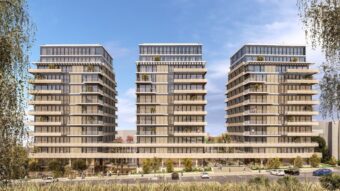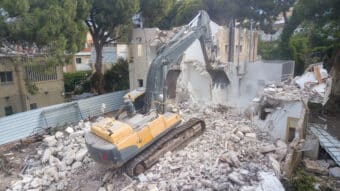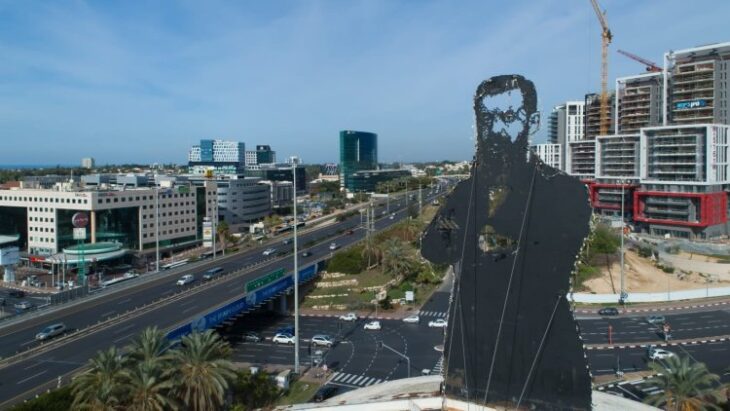
The Herzliya Municipality and the Israel Land Authority (ILA) are expected to sign today (Monday) a roof agreement for the construction of 45,756 new apartments in the city over the next decade—about 22,006 units on state-owned land and approximately 23,750 units on private land, including the “Hof Ha’Tchelet” area. The state will invest six billion shekels in infrastructure, including more than 3 billion shekels for nationwide-level systems. This expansive Herzliya Housing Plan marks one of the largest coordinated development initiatives in Israel.
Among the agreements reached is the development of the “Northern Quarter,” now advancing through the VATMAL (TAMA/3006), covering roughly 15,500 apartments and 500,000 square meters of commercial and employment space. A roof agreement is a formal deal in which the city commits to advancing large-scale housing plans, while the government commits billions of shekels to build the roads, schools, parks, and public services needed to support those homes. The area is bordered by Road 531 to the north, Menachem Begin and Ha’Brigada HaYehudit to the south, Jerusalem Boulevard to the east, and Kfar Shmaryahu to the west. Today, most of the land is agricultural and includes the Herzliya Airport, slated for evacuation. This section of the Herzliya Housing Plan also includes the “Kiryat Maslul” plan (TAMA/1083) in northern Herzliya, expected to include 2,290 apartments and 33,750 square meters of commercial and employment space.
The agreement also determines the implementation of the “Hof Ha’Tchelet” plan along the city’s southern coastline, which will include approximately 14,100 apartments and about 463,000 square meters for employment and commerce. Additionally, Plan 1934/B will add around 3,200 housing units and roughly 460,000 square meters of commercial and employment areas. These elements form a major component of the Herzliya Housing Plan.
According to a joint statement from ILA and the Herzliya Municipality, “The agreement establishes financing structures and timelines for national-scale infrastructure and for public buildings and institutions. It will take effect within the 2026–2032 work plans and relevant ministerial budgets.” The parties agreed to pool resources to support the development of both state-owned and private lands. The agreement was led by the ILA Development Division, headed by Meir Shtauber, and the ILA Tel Aviv Business District, headed by Adv. Tali Morali.

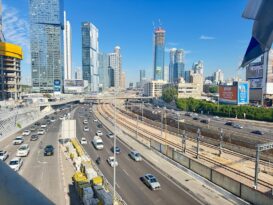
Infrastructure investments include: about half a billion shekels for the construction of the new Rav Ha’Mecher Interchange—a key connection between the Glilot West Interchange and the Ha’Sira Interchange; about 250 million shekels for upgrading Herzliya’s beachfront according to the city’s waterfront masterplan; about 200 million shekels for transportation infrastructure along major city arteries to support citywide development and improve service for existing neighborhoods; and another 200 million shekels for establishing a central park within the Hof Ha’Tchelet plan. These components further strengthen the Herzliya Housing Plan vision.
In a joint statement, ILA and the municipality said: “While the 2016 roof agreement focused primarily on accelerating residential construction, the new roof agreement aligns the pace of residential development with the development of essential infrastructure needed to maintain quality of life.” The agreement includes upgrades to educational and public facilities in older neighborhoods built before 2000, significant investment in transportation improvements and access to major highways (Roads 2, 20, and 531), improved roads, pedestrian pathways, and stronger connections to the train station.
Public open spaces—parks, open public areas, sidewalks, and lighting—will also be upgraded. In the Herzliya Park area, a new sports and events arena will be built, serving as the home court for “Bnei Herzliya.” Cultural institutions, including the municipal library and the Herzliya Museum, will be renovated, ensuring that education, culture, and transportation infrastructure meet the city’s projected growth.
Herzliya Mayor Yariv Fisher said: “The new roof agreement will allow us to renew and upgrade existing infrastructure, much of which has not been touched since Herzliya was founded. The agreement will strengthen the city, preserve its character, enable the development of more green spaces and the expansion of the beachfront promenade, significantly enlarge the employment district, and improve roads, interchanges, and bicycle paths—enhancing residents’ quality of life.”
Israel Land Authority Director Yaakov (Yanki) Quint added, “I congratulate the mayor and the city of Herzliya on the signing of this agreement. The process was preceded by extensive professional work, long-term planning, and careful consideration of all needs. Herzliya is one of the most sought-after cities in central Israel, with diverse residents and significant land reserves—some with high scenic value along the coast. It was therefore essential to ensure solutions aligned with expected growth while maintaining an uninterrupted urban environment with advanced planning for housing, infrastructure, employment, parks, and high quality of life.”

Nadlan Center is Israel’s leading real estate news and knowledge platform in Hebrew, created for industry professionals. Founded by experts in the field, it delivers in-depth, up-to-date coverage on urban renewal, planning and construction, taxation, and housing policy — tailored to the needs of developers, investors, planners, and financiers. In addition to its widely read news content, Nadlan Center hosts major industry events, professional conferences, and training programs that support the growth and development of the Israeli real estate sector.
Learn more: https://www.nadlancenter.co.il