Israeli apartment prices continued to decline in April-May 2026, according to the apartment price index published this evening (Wednesday) by the Central Bureau of Statistics (CBS). According to the data, apartment prices fell 1% compared to the previous two months (March-April), and dropped 2% compared to the corresponding period last year (April-May 2025).
By Nimrod Busso, Nadlan Center
Broken down by district, the sharpest monthly decline in apartment prices was recorded in the Tel Aviv district, where prices fell 2.3%, followed by the Jerusalem district with a 1.8% drop. In the Haifa district prices fell 0.5%, in the North district 0.3%, while the Center and South districts saw no change.
On an annual basis, price declines were recorded in four districts: Center (-3.2%), Haifa (-2.6%), Tel Aviv (-2.5%) and South (-0.5%). In contrast, the North district recorded a price increase of 1.4%, and the Jerusalem district saw a moderate increase of 0.3%.

Against the backdrop of the sharp decline in the market as a whole, the new apartment price index showed relative stability, falling 0.1% compared to March-April. However, when netting out government-subsidized purchase transactions (the “discounted apartment” program), new apartment prices actually rose 0.2%. On an annual level, the index fell 3.9% compared to April-May 2025.
The data also show that the share of transactions under government subsidy programs continues to rise: their proportion reached 37.5% of all new apartment transactions, compared to 34.6% in the previous period. This figure continues to affect the overall new apartment price index.
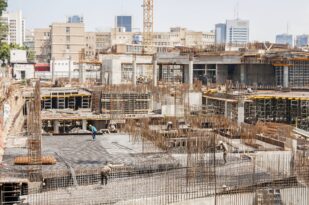
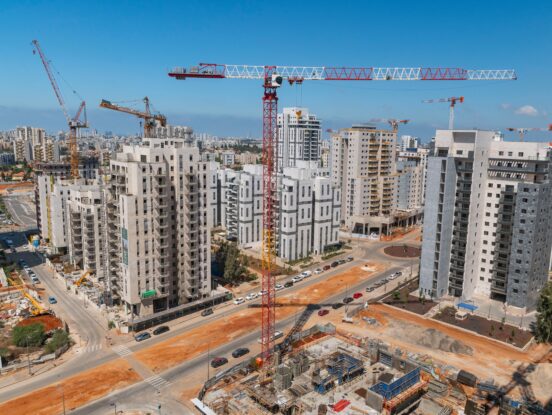
The Israel Builders Association said the industry is currently operating under exceptional conditions of uncertainty. Many developers report that even after receiving building permits, they are choosing not to begin actual construction, due to the uncertainty. The government must act immediately to prevent a decline in construction volumes in the coming years: increase market certainty, reduce regulatory and bureaucratic barriers, promote efficient marketing of land, lower the purchase tax to encourage and stimulate the market, shorten licensing procedures, provide solutions to the labor shortage in the industry, and take steps that will enable a reduction in financing and input costs. Most importantly, the association called for promoting regulation and economic viability for building long-term rental apartments and investing in them. Maintaining a high pace of construction is a national interest, the association added, warning that without determined measures to ensure economic viability for developers and contractors, the decline in construction starts could, within a short time, lead to a renewed shortage in supply and renewed pressure on housing prices.
The Consumer Price Index for June 2026, also published this evening, remained unchanged compared to May 2026. Over the past twelve months (June 2026 compared to June 2025), the Consumer Price Index rose 1.6%.
However, the housing item within the index rose 0.7%, one of the items that increased sharply. Rent for tenants who renewed their lease rose 2.6%, while rent for new tenants, meaning apartments in the sample where a tenant turnover occurred, rose 6.6%. The CBS noted that these rates reflect an approximation of the annual rate of change in rent for these groups, since rent does not change for the vast majority of tenants during the year, as they remain under lease agreements in which the monthly rent is fixed, usually without linkage mechanisms.
The residential construction cost index rose 0.2% in June 2026, reaching 103.6 points compared to 103.4 points the previous month. Since the start of the year, this index has risen 2.4%, and over the past 12 months (June 2026 compared to June 2025) the residential construction input price index rose 3.7%, mainly due to a 5.5% increase in labor costs during this period.
The materials and products price index rose 0.2% in June 2026. Among materials and products, prices rose particularly for sewage and drainage systems (5.6%), water systems (2.7%), quarry materials and their transport (1.5%), and mesh and cages (0.7%). In contrast, prices fell for wrought-iron products (2.1%) and ready-mix concrete (0.9%).

Nadlan Center is Israel’s leading real estate news and knowledge platform in Hebrew, created for industry professionals. Founded by experts in the field, it delivers in-depth, up-to-date coverage on urban renewal, planning and construction, taxation, and housing policy — tailored to the needs of developers, investors, planners, and financiers. In addition to its widely read news content, Nadlan Center hosts major industry events, professional conferences, and training programs that support the growth and development of the Israeli real estate sector.
Learn more: https://www.nadlancenter.co.il