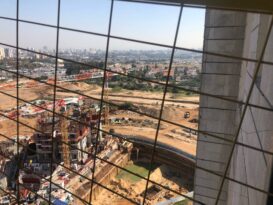
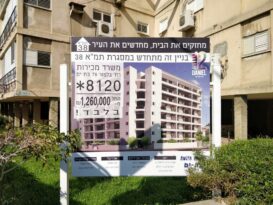
Last week, 85 French Jews planning to make aliyah in summer 2027 toured new residential projects in Tirat Carmel as part of a government preparation program. The visit points to two shifts: aliyah from France has grown steadily since October 7, and future olim are looking past the traditional strongholds toward the north, where housing is more affordable and urban renewal is changing whole neighborhoods.
Last week, 85 residents of France who intend to move to Israel next summer spent a day touring residential projects by the developer Renew in Tirat Carmel, the coastal city on Haifa’s southern edge. The visit was part of “Lech Lecha”, a preparation program run by the Ministry of Aliyah and Integration together with the local municipality. It was not a sales event, but it did produce sales interest: several participants said they wanted to buy and signed up to continue the purchase process with the developer. This was the fourth group hosted in the city through the program.
The numbers explain why these tours keep filling up. Aliyah from France has risen sharply since October 7: 1,097 French olim arrived in 2023, more than double that (2,234) in 2024, and 3,357 in 2025. Ministry of Aliyah and Integration and Jewish Agency figures show roughly 2,400 French olim had arrived by the end of July 2026, more than 30% above the same period last year. For many, the practical question has changed from whether to go to where to live, and that is the question Lech Lecha is helping them answer.
How the Lech Lecha Program Prepares Future Olim
Lech Lecha works with aliyah candidates from France during the preparation stage, usually one to two years before their planned move. Most of the frustrations new immigrants describe in their first months, such as registering children in the right school, opening a bank account, and working out which services handle what, are easier to deal with from abroad when there is time and guidance. The program helps participants get ready for the move and introduces them to Israeli systems, including education and banking, so that they arrive with fewer surprises.

City tours are a central part of the program. They are organized with local authorities so that participants can see a city up close: its neighborhoods, schools and housing stock, as well as the kind of daily life it offers. Besides Tirat Carmel, the current series has included Karmiel, Ashkelon and Nahariya, with another tour planned for January. The list itself is revealing. None of these cities is Netanya, Ashdod, Jerusalem or Ra’anana, the places where French olim have traditionally clustered. Both the state and the municipalities want newcomers to see that there is a strong case for building a life outside the most expensive and crowded centers. Cities in the north and south are making that case directly, and they are competing for the people who will arrive over the next few years.
Why Tirat Carmel Is Getting a Second Look
Tirat Carmel sits on a narrow strip between the Carmel ridge and the Mediterranean, at Haifa’s southern entrance. It is close to the MATAM high-tech park, the Haifa coastal road, and the routes south toward Tel Aviv. Residents can reach Haifa’s hospitals, universities, and technology employers quickly, and the beaches and the Carmel nature reserves are nearby. For olim who will work in Haifa or commute along the coast, the location makes sense.
The city’s reputation has lagged behind its location for years, and that is now changing. Large-scale urban renewal is replacing ageing housing blocks with modern towers, and new construction is reshaping parts of the city. For a buyer from abroad, this produces both opportunity and complexity. New apartments in a renewing city usually cost considerably less than comparable homes in the center of the country. But neighborhoods in transition can look very different block to block, and the finished character of an area may be years away. These tours are valuable because they let future buyers see a place for themselves and judge it with their own eyes, without relying only on a brochure or a WhatsApp video.
Rent First, Then Decide
The program also offers a piece of advice many future olim find counterintuitive: after arriving, many new immigrants choose to rent for their first year, so they can test whether a city and neighborhood suit them before making a long-term commitment. This is often wise. A family that has never lived through a summer on the coastal plain, done the school run in Israeli traffic, or tried to find their place in a new synagogue community learns a great deal in twelve months.
That doesn’t make early tours a waste of time. Seeing a city a year or two ahead gives a family a shortlist, a sense of prices, and a realistic picture of what daily life would look like. Some participants will buy now, while others will rent first and buy later once they’re settled. Either way, they will be choosing from first-hand experience rather than from listings and photos.
A Wider Shift Toward the North and the Coast
The French group’s visit is part of a broader policy effort. In November 2025, the Israeli government approved a five-year aliyah plan, and municipalities across the periphery are moving to attract newcomers who might once have gone directly to Netanya or Jerusalem. Developers have noticed too. Hosting future olim, explaining financing and benefits, and building in cities that welcome newcomers has become a standard part of their marketing.
For anyone thinking about the move, from France or elsewhere, the conclusion is simple. Start early, visit more than one city, and take the time to choose. The 85 people who walked through Tirat Carmel last week will arrive next summer with a clearer idea of where they want to live, and some of them will already own a home there. For more information on aliyah programs and support, Nefesh bNefesh is a good place to begin.
The Buyitinisrael Editorial team is made up of industry experts, journalists, researchers, editors, and translators working together to deliver reliable, up-to-date information about the Israeli property market — all in English. With a strong focus on transparency and accessibility, our goal is to empower English-speaking buyers by helping them understand the market and navigate the real estate process with clarity and confidence.
For inquiries, email [email protected].