
In a rare and emotionally charged case, the Jerusalem Family Court ruled that a property registered in a son’s name was not truly his, but rather held in trust for his late father’s estate. The court found that the father had funded the entire purchase and maintained full control over the land, while the son—who struggled with significant mental health and dependency issues—lacked the capacity to manage it independently. The Judge concluded that the registration served merely as a technical formality and did not reflect actual ownership, finding that the arrangement constituted an implied trust. The ruling highlights how Israeli courts may look beyond formal registration when mental health and family dynamics distort true ownership intentions.
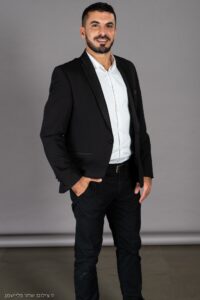
By Adv. Avihu Ben-Zechar, assisted by intern Rowan Agbariya
The Jerusalem Family Court recently heard a rare and emotional family dispute over the ownership of a valuable plot of land. The case began between a son and his parents, and after the father’s death, continued between the son and the father’s estate.
The father, who paid the entire purchase price of the land from his own funds, registered half of the property in his son’s name. The son, who suffered from serious medical and mental health issues, signed irrevocable powers of attorney and transfer affidavits over the years, giving his father full authority to manage the property.

When the relationship of trust between them broke down, the son claimed that his signatures had been forged and that the property was gifted to him outright. The estate, however, argued that the registration in the son’s name was merely a technical formality for convenience, and that the son had served as a “reluctant trustee”—a person formally listed as owner but acting solely as a custodian for his father, who in practice controlled, managed, and financed the property.
A Fundamental Issue: Gift or Trust?
The court was tasked with determining whether the registration granted the son full ownership or constituted an implied trust, leaving true ownership with the father.
The court examined key evidence, including:
- The powers of attorney and transfer affidavits were signed by the son, granting his father full control.
- Expert handwriting analysis confirmed that the son’s signatures were genuine, dismissing claims of forgery.
- The family’s conduct over the years showed that the father alone managed the property, made all major decisions, and funded every expense.
The evidence painted a clear picture: the son never acted as a genuine owner but merely held formal registration. His severe dependence on his father—both medically and psychologically—affected his capacity to understand or manage the property. The court therefore concluded that this was not a genuine gift but an implied trust shaped by years of behavior and family dynamics.
Court Decision: Ownership Belongs to the Estate
After weighing all the evidence, the Honorable Judge Orit Avigail Yahalomi ruled that ownership of the land rested entirely with the father’s estate. The court rejected the son’s claims for rent or compensation, determining that the registration in his name was purely technical.
Judge Yahalomi emphasized that the son acted only as a “technical trustee.” His registration in the Land Registry did not reflect true ownership but rather a private family arrangement designed to protect the father’s control over the property.
Implications of the Verdict
The ruling highlights the delicate balance between formal registration and actual ownership in family-related property disputes:
- Land Registry registration does not always prove actual ownership; courts will consider intentions, evidence, and the parties’ conduct.
- In cases involving vulnerability, dependence, or mental health challenges, the court may recognize an implied trust even when no formal trust document exists.
- Irrevocable powers of attorney and transfer affidavits can serve as evidence that registration was for convenience, not true ownership.
The decision shows the court’s willingness to go beyond formal documentation to uncover the underlying reality, ensuring fairness in complex family and mental health contexts.
Summary
This case demonstrates that in exceptional situations, especially those involving medical or mental health dependence, the court may look past the formal title to identify the real owner.
While registration in the Land Registry remains the cornerstone of property ownership in Israel, the court clarified that it is not absolute. When strong evidence suggests a different intent or control dynamic, registration may be deemed to represent an implied trust rather than genuine ownership. In this case, the son’s mental condition, his signed authorizations, and the expert testimony together proved that the registration served a practical purpose rather than signaling a true transfer of rights.
The ruling serves as a warning for families: when registering property among relatives—particularly when one party is dependent or vulnerable—it is essential to clarify intentions and ensure that documentation reflects reality. The message is clear: formal registration is crucial, but it does not override the truth. When evidence proves otherwise, Israeli courts may recognize an implied trust to uphold justice and reflect actual ownership.
(Tammish 24824-12-20 and Tammish 33-01-21, Jerusalem Family Court, Judge Orit Avigail Yahalomi, December 24, 2024.)
Gindi Caspi & Co. is one of Israel’s most prominent law firms in real estate, planning and zoning, and urban renewal. With decades of extensive experience handling complex and large-scale real estate transactions, the firm is consistently ranked among the top-tier firms in these fields by all major rating companies. Notably, the international LEGAL 500 recognized Gindi Caspi & Co. as a Leader in real estate, planning, and zoning and highlighted Adv. Ziv Caspi as a Leading Individual in Israeli law. The firm has also received numerous accolades, including ranking among the top real estate law firms (Dun’stars) in planning, zoning, and urban renewal. It was honored as a “pillar and cornerstone in fulfilling the nation’s vision for building and settling the land.” For five consecutive years, the firm has been ranked first in Israel in the field of urban renewal.
For inquiries, contact [email protected].