Life in Israel is full of “only in Israel” moments — like when your cab driver invites you for Shabbat dinner, or you see a five-year-old confidently pushing a stroller down a busy Jerusalem street. That same blend of warmth, practicality, and deep-rooted tradition shows up inside the home, too. From rocket-proof safe rooms and solar water heaters to Shabbat timers and mezuzot, here are 10 small but telling unique features of Israeli homes that you probably won’t find elsewhere.
Step into an Israeli apartment, and even before the coffee’s poured, there’s a good chance you’ll notice a few things that feel unfamiliar. Israeli homes aren’t just shaped by geography and climate. They reflect a particular mix of security needs, practicality, and Jewish tradition that doesn’t always match what you’ll find in homes overseas.
Some of the unique features of Israeli homes are modern necessities, while others are quiet cultural habits passed through generations. Together, they paint a clear picture of daily life in Israel. Here are 10 things you’ll almost always find in an Israeli home, plus one nostalgic throwback that many households still keep around:
1. The Mamad — Israel’s Built-In Safe Room
Since the early 1990s, every new apartment or house in Israel has been legally required to include a “Mamad“: a reinforced safe room designed to provide protection during rocket attacks or other emergencies. At first glance, it appears to be a regular room. You might see a bed or a desk inside. But when you look closer, you’ll notice thick concrete walls, a solid steel door, and window shutters that seal completely shut. It’s not just a feature of life — it’s part of Israel’s DNA. The mamad reflects both the country’s realities and its resilience.

2. Dud Shemesh — Solar Water Heating for All
Before sustainable energy was trendy, Israeli homes were already running on solar. Across this sunny Mediterranean country, rooftops are lined with solar water heaters called dud shemesh (literally, “sun boiler”). From private homes in the north to high-rises in Tel Aviv, this system uses the sun’s heat to provide hot water year-round, backed up by an electric heater for colder or cloudy days. You might not see the dud shemesh from inside, but step outside and look up: those silver tanks and black panels are everywhere.
3. Trisim — The Israeli Roll-Down Shutter
Instead of curtains or blinds, most Israeli homes have trisim — heavy-duty roll-down shutters made from plastic or metal. These shutters serve multiple purposes: they block out sunlight and heat in the scorching summer, they cut down outside noise, and they provide an extra layer of security. The best part? You can adjust them to let in just a sliver of light or close them completely for true blackout conditions.
4. Mirpeset — The All-Purpose Israeli Balcony
From laundry lines to family dinners, the mirpeset (balcony) is an essential part of Israeli home life. Some are large enough for a baby pool and full size table, while others barely fit a small table and two chairs. But they all serve as an extension of living space — whether for sipping coffee, growing herbs, or just catching a breeze in the evening. Even more quintessentially Israeli is the sukkah balcony, apartment buildings with scattered balconies spread out so that each family can build their own sukkah without being blocked by the balcony above them. No matter the size or layout, an Israeli home without a mirpeset feels incomplete.
5. Floor Drains in the Bathroom
One of the first things visitors notice is that many older Israeli bathrooms don’t have shower curtains or fully enclosed stalls. That’s because the entire room is built as a wet room, with a central floor drain. On the upside, cleaning is easy: you just spray down the whole room without worrying about water damage. But for those who don’t like having wet socks or squeegeeing the whole bathroom after they take a shower, it can take some getting used to.
6. The Refrigerator Magnet Collection
Forget souvenir magnets from vacation spots — Israeli refrigerators are covered in magnets from weddings, bar mitzvahs, and bat mitzvahs with photos, dates, and lots of smiling faces! You’ll also see magnets from pizza places, locksmiths, babysitters, and local service providers. It’s part functional, part cultural bulletin board — and somehow, no matter how sleek and modern the kitchen is, the magnets always find their way onto the fridge.
7. Shabbat-Ready Features & Spiritual Touches
In a country where Jewish tradition is part of the national rhythm, many homes are designed with Shabbat in mind. You’ll often find pre-installed Shabbat timers in the electric box for setting lights or Shabbat elevators that stop automatically on every floor. Alongside these practical elements, you’ll also see mezuzot affixed to nearly every doorpost, reflecting a deep cultural continuity. Some families even leave an unfinished square on their wall near the front door — a centuries-old tradition known as zecher l’churban, meant to recall the loss of the Temple in Jerusalem. Even in sleek modern apartments, these small, symbolic gestures tie daily life to Jewish memory and identity.
8. The Mini Squeegee
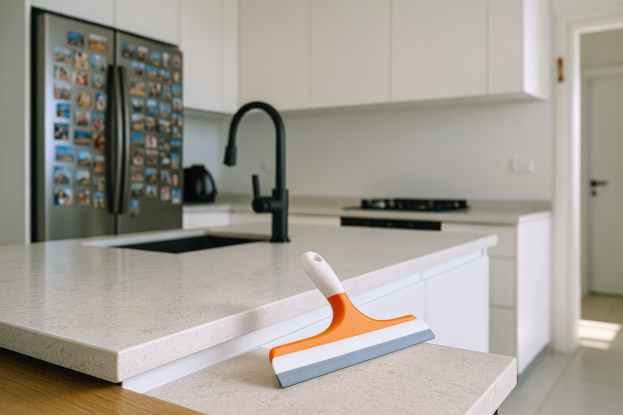
If there’s one small tool that captures Israeli practicality, it’s the plastic countertop squeegee. Nearly every home has one hanging somewhere — by the sink, in the shower, next to the bathroom mirror, or all of the above. It’s used to wipe down glass doors, kitchen counters, tiles, and anything else that needs a quick dry-off. No paper towels. No waste. Just swipe and move on with your day.
9. The Heavy-Duty Front Door
In most Israeli homes, the front door is a metal-core, designed for security, with multi-bolt locking systems that secure the door from multiple directions. Even if it looks like wood on the outside, it’s actually reinforced steel on the inside, adding an extra layer of safety that feels uniquely Israeli.
10. Water Filters on the Faucet
Israeli tap water is safe to drink but naturally high in minerals, also known as “hard water.” That’s why you’ll see countertop water filter pitchers or faucet-mounted filters in many Israeli kitchens. It’s not about safety — it’s about taste, clarity, and protecting your coffee machine from mineral buildup.
Bonus: The Milk Bag Pitcher
As promised, in addition to these 10 unique features of Israeli homes, here’s one classic throwback. For years, Israeli milk came mainly in soft plastic milk bags. Every kitchen had a hard plastic pitcher specifically designed to hold that floppy bag steady. Today, milk cartons and bottles are more common, but plenty of homes still have a milk bag pitcher tucked in the back of a cupboard. A true Israeli relic.
More Than Just Walls and Windows
Every country has its architectural quirks. But many of these unique features of Israeli homes are shaped by the land, the people, and the reality of living in a place that blends ancient history with modern life. These little details aren’t just about practicality. They’re part of the rhythm and mindset of everyday living here. Security, resilience, flexibility — and deep Jewish memory — all show up in the layout and objects of a typical Israeli home.
So next time you step into an Israeli apartment, keep an eye out. The mamad, the magnets, the light timers, the squeegee, even the unpainted wall — they all have a story to tell.
The Buyitinisrael Editorial team is made up of industry experts, journalists, researchers, editors, and translators working together to deliver reliable, up-to-date information about the Israeli property market — all in English. With a strong focus on transparency and accessibility, our goal is to empower English-speaking buyers by helping them understand the market and navigate the real estate process with clarity and confidence.
For inquiries, email [email protected].