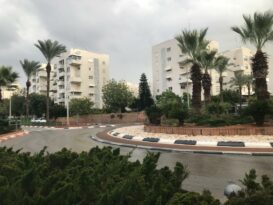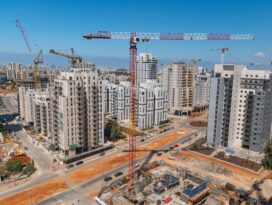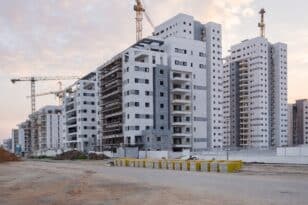
Israel’s Central Bureau of Statistics (CBS) has published its 2024 Quality of Life Index for the country’s 18 largest cities. Kfar Saba leads most indicators, alongside Ramat Gan, Herzliya, and Rehovot, all of which rank at the top. Hadera stands out for housing affordability, Bat Yam residents report relatively high satisfaction with their apartments, while Holon has dropped into the group of cities with the lowest overall quality of life.
By Li Saadon, Nadlan Center
The Central Bureau of Statistics released its Quality of Life Index for 2024 today (Monday), covering Israel’s 18 largest cities. The report is based on 56 quality-of-life indicators, of which 38 are common indicators enabling direct comparison across all cities. These include employment quality, personal security, health, housing and infrastructure, education and higher education, life expectancy, and more.
For comparison purposes, the cities were divided into three groups based on their overall quality-of-life scores. The high-ranking group includes Kfar Saba, Ramat Gan, Herzliya, Rehovot, Petah Tikva, Netanya, and Tel Aviv–Jaffa. The mid-ranking group includes Beit Shemesh, Rishon LeZion, Haifa, Be’er Sheva, Bnei Brak, and Hadera. The lowest-ranking group includes Holon, Ashdod, Ashkelon, Bat Yam, and Jerusalem.

Kfar Saba leads most quality-of-life indicators. Of the 49 available indicators, the city performs better than the national average on 39. Residents report high satisfaction with their work (98.1% compared to a national average of 91.9%), with parks and green spaces (84.3% versus 61.9%), and experience less disturbance from external noise at home (22.7% compared to 30.7%). In addition, no traffic fatalities were recorded in the city in 2024.
At the same time, Kfar Saba scores below the national average in satisfaction with public transportation (24.1% versus 40.3%), in the share of involuntary part-time employment (1.8% compared to 0.8%), and in feelings of loneliness among residents (24.8% versus 21%).
In second place, Ramat Gan stands out particularly in employment and education. Of the 54 available indicators, it performs better than the national average on 42. The city shows an exceptionally high employment rate (98.1% versus 60.8%), higher life expectancy (84.9 years compared to 83.4), and a high matriculation eligibility rate (76.4% versus 55.5%).
On the downside, Ramat Gan experiences higher levels of external noise in residential areas (39.6% versus 30.7%), relatively low housing affordability (21.7% versus 29.1%), and a higher rate of long-term unemployment (29.4% versus 21.2%).
Herzliya ranks third, presenting the profile of a wealthy city with high-quality living conditions. It stands out for a particularly high median household income (NIS 29,517 versus NIS 18,837), relatively low housing density (0.63 persons per room versus 0.83), high trust in the healthcare system (91.3% versus 81.9%), and a high share of workers employed in fields matching their education (79% versus 73%). At the same time, Herzliya residents report higher-than-average levels of depression (37.9% versus 29.7%), dissatisfaction with commuting times to work (58.3% versus 45.5%), and lower housing affordability (21.7% versus 29.1%).
In fourth place is Rehovot, where residents report particularly high satisfaction with their residential area (96.4% versus a national average of 85.6%), a very high rate of post-secondary and higher education attainment (91.5% versus 53.8%), and a stronger sense of ability to influence government policy (17.5% versus 11.6%). On the other hand, drinking water quality is below the national average for coliform deviations (2.1% versus 0.5%), and trust in the judicial system is relatively low (33.5% versus 42.2%).
Petah Tikva moved this year into the group of cities with a high overall quality-of-life score, ranking fifth. The city shows strong results in satisfaction with cleanliness in residential areas (74.7% versus 58.3%), a lower share of households spending 30% or more of their income on housing (28.2% versus 34.6%), and high satisfaction with work–life balance (77.7% versus 68.4%).
At the same time, satisfaction with work is slightly below the national average (88.6% versus 91.9%), the rate of new cancer cases among women is higher (340.6 versus 282.8 per 100,000 residents), and the sense of ability to cope with problems is significantly lower than average (44.1% versus 71.7%).
Netanya also moved into the high-ranking group, reaching sixth place. The city stands out for relatively low housing service costs as a share of monthly income (12.2% versus a national average of 23.9%), high satisfaction among employed residents with their income (83.6% versus 66.9%), and higher trust in the government (35.5% versus 25.8%). On the negative side, Netanya residents report higher feelings of discrimination (28% versus 22.9%), and drinking water quality is lower in terms of coliform deviations (1.7% versus 0.5%).
Tel Aviv–Jaffa ranks seventh in the top group. The city stands out for a relatively low rate of long-term unemployment (15.6% versus 21.2%), exceptionally high civic engagement (45% versus 15.4%), high monetary income (NIS 187,800 versus NIS 115,600), and high economic income (NIS 266,600 versus NIS 136,400). It also shows a high share of residents involved in volunteer activities (40.9% versus 28.3%).
On the other hand, Tel Aviv–Jaffa suffers from high levels of external noise disturbing residential apartments (44.8% versus 30.7%), very low housing affordability (10.8% versus 29.1%), and a significantly higher share of households spending 30% or more of their income on housing (50.8% versus 34.6%).
Rishon LeZion Praised for Green Spaces, Hadera Excels in Affordable Housing
The mid-ranking group presents a more mixed picture. Beit Shemesh stands out for trust in the government (35.7% versus 25.8%) and positive expectations for the future (68.3% versus 56.6%). However, the city suffers from low trust in the healthcare system (61.8% versus 81.9%) and higher-than-average housing service costs (29.1% versus 23.9%).
In Rishon LeZion, residents report satisfaction with green spaces (75.1% versus 61.9%) and lower feelings of discrimination (16.7% versus 22.9%). At the same time, the city shows relatively low satisfaction with income from work (55.3% versus 66.9%), low expectations for the future (37.9% versus 56.6%), and a low sense of ability to cope with problems (37.1% versus 71.7%).
Haifa excels in civic engagement (24.5% versus 15.4%) and satisfaction with public transportation (57.0% versus 40.3%). However, it scores lower in satisfaction with cleanliness in residential areas (48.3% versus 58.3%) and with work–life balance (61.3% versus 68.4%).
Be’er Sheva leads in satisfaction with housing (93.2% versus 88.5%) and availability of affordable housing (48.7% versus 29.1%). On the downside, the city shows higher rates of overweight among first-grade children (27.8% versus 17.6%) and lower civic engagement (7.2% versus 15.4%).
Bnei Brak shows lower rates of overweight among first-grade children (21.3% versus 30.6%), impressive results in coping with problems (94.2% versus 71.7%), and a stronger sense of appreciation among family members (97.5% versus 85.5%). In contrast, matriculation eligibility is particularly low (8.7% versus 55.5%), as are trust in the judicial system (10.1% versus 42.2%) and rates of long-term unemployment (33.4% versus 21.2%).
Hadera excels in affordable housing indicators (42.1% versus 29.1%) and relatively low housing density (0.71 persons per room versus 0.83). At the same time, the city scores lower in median household income from work (NIS 14,046 versus NIS 18,837) and reports higher levels of depression (36.8% versus 29.7%).
Holon Declines, Ashkelon Shows Low Depression Levels
The lowest-ranking group includes cities facing the greatest challenges. Holon joined this group this year, despite lower housing costs (15.7% versus 23.9%) and lower infant mortality (1.5 per 1,000 live births versus 2.7). On the other hand, it scores lower in satisfaction with residential areas (78.8% versus 85.6%) and general trust in others (29.0% versus 38.3%).
Ashdod leads in computer accessibility and drinking water quality, but scores lower in 29 indicators, including participation in volunteer activities (14.3% versus 28.3%), satisfaction with work–life balance (55.9% versus 68.4%), and overall life satisfaction (84.9% versus 91.1%).
Ashkelon stands out for relatively low levels of loneliness and depression, but performs poorly in 29 indicators, including the share of waste sent for recycling (7.5% versus 24.4%) and rates of post-secondary and higher education attainment (39.5% versus 53.8%).
Bat Yam shows good public transportation and convenient commuting times, but scores lower in 31 indicators, including satisfaction with housing (77.4% versus 88.5%), lower life expectancy (81.4 years versus 83.4), and satisfaction with economic situation (51.8% versus 66.1%).
Jerusalem is also in the lowest-ranking group. On the positive side, the city leads in drinking water quality and shows relatively low rates of new cancer cases. On the negative side, it scores below the national average in median household income (NIS 12,904 versus NIS 18,837), sense of ability to influence government policy (8.2% versus 11.6%), and long-term unemployment (33% versus 21.2%).
At the same time, the CBS emphasizes that Jerusalem’s situation is more complex due to the city’s high level of heterogeneity between its Jewish and Arab populations, which creates deep internal disparities within the city itself.

Nadlan Center is Israel’s leading real estate news and knowledge platform in Hebrew, created for industry professionals. Founded by experts in the field, it delivers in-depth, up-to-date coverage on urban renewal, planning and construction, taxation, and housing policy — tailored to the needs of developers, investors, planners, and financiers. In addition to its widely read news content, Nadlan Center hosts major industry events, professional conferences, and training programs that support the growth and development of the Israeli real estate sector.
Learn more: https://www.nadlancenter.co.il