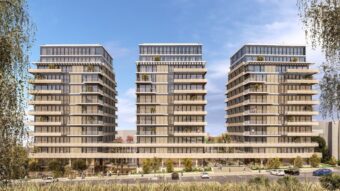
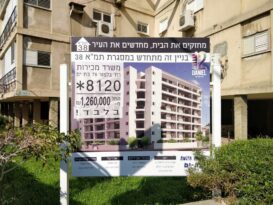
A legal dispute over a proposed housing expansion in Jerusalem’s Romema neighborhood has clarified an important question about ownership and planning rights in a “complex building”—a shared residential property made up of multiple separate buildings registered together. The case addressed whether residents of one building need approval from neighbors in adjacent buildings to submit a plan for additional housing units. The court ruled they do not—so long as no harm is caused to the other buildings—setting a precedent for future planning initiatives in similar complexes.
By Adv. Sharon Efrion, Gindi-Caspi Law
“Shared Building” vs. “Complex Building”
When submitting a construction plan within a residential complex that includes multiple buildings, it’s important to distinguish between a “shared building” and a “complex building”:
- Shared Building: A residential building with two or more apartments, officially registered in the Shared Buildings Registry. All residents share the common property (roof, walls, yard, elevators, infrastructure, etc.).
- Complex Building: A shared building made up of several separate structures or wings (e.g., rows of townhouses), each with its own entrance or utility systems (water, electricity, etc.). In such cases, the condominium bylaws may assign exclusive common areas (like yards or roofs) to the apartments in each specific structure. These buildings are often managed separately.
Under Israel’s planning regulations, when a proposed plan involves adding apartments to just one structure within a complex building, and no “harm” is caused to the others, only a majority of the owners in that specific structure are required for approval—not all the residents in the entire complex.

This ruling reviews a decision by the Jerusalem District Court on whether such a majority is sufficient, or whether consent is needed from residents across the whole complex.
Case Background:
This case concerns a complex building in the Romema neighborhood of Jerusalem, where two parallel rows of townhouses form a jointly registered complex. In one of the buildings, owners of three out of five apartments submitted a plan to enlarge their units and add two additional floors. Residents of the other building—registered together as part of the same shared property—objected. They argued that the entire complex must be considered one unit when calculating the majority required under the planning regulations, and that the required 60% approval from all apartment owners had not been met.
Legal Question:
Is 60% consent required from owners across the entire complex, or is it enough to have 60% support just within the building where the expansion is planned, as long as it doesn’t affect the others?

Court Ruling:
The court dismissed the petition, ruling that approval from a majority of owners in the specific structure where the expansion is planned is sufficient—provided no damage is caused to the other buildings. It determined that the complex met the legal definition of a “complex building” under Section 59 of the Real Estate Law, and that the level of consent obtained (60% within the building in question) met the requirements of the Planning and Building Regulations (Apartment Owner’s Right to Submit a Plan), 2016.
The court also rejected the petitioner’s claims that the project would alter the character of the street, increase traffic and infrastructure burdens, or block light, air, views, and privacy. These were deemed planning considerations under the authority of the relevant planning committees, which had already reviewed the plan and found it aligned with policy, posed no significant harm, and fit the surrounding environment.
The court emphasized that the petitioner had no right to preserve the current state indefinitely, and that given Jerusalem’s urgent housing needs, a fear of change is not a valid reason to block the plan. If actual harm occurs, the matter can be addressed through compensation under Section 197 of the Planning and Building Law.
The petitioner’s request for leave to appeal was also denied. The court found the plan to be specific and localized, without broader legal or public implications warranting review by the National Council for Planning and Building.
Case: Administrative Petition (Jerusalem) 45282-04-24 Carmi Yellin v. Jerusalem District Planning Committee (Nevo, March 5, 2025)
Edited by:
Written by Adv. Sharon Efrion, June 4, 2025.
Gindi Caspi & Co. is one of Israel’s most prominent law firms in real estate, planning and zoning, and urban renewal. With decades of extensive experience handling complex and large-scale real estate transactions, the firm is consistently ranked among the top-tier firms in these fields by all major rating companies. Notably, the international LEGAL 500 recognized Gindi Caspi & Co. as a Leader in real estate, planning, and zoning and highlighted Adv. Ziv Caspi as a Leading Individual in Israeli law. The firm has also received numerous accolades, including ranking among the top real estate law firms (Dun’stars) in planning, zoning, and urban renewal. It was honored as a “pillar and cornerstone in fulfilling the nation’s vision for building and settling the land.” For five consecutive years, the firm has been ranked first in Israel in the field of urban renewal.
For inquiries, contact [email protected].