By Doron Breutman, Nadlan Center
The National Council’s Appeals Subcommittee has rejected objections filed against the Epstein Complex, a plan that includes a 42-story tower promoted by M.O. Epstein, determining that no planning grounds justify halting the plan approved by the District Committee. Opponents argued the tower would harm Mount Herzl, Yad Vashem, and surrounding natural and scenic values.
The Appeals Subcommittee of the National Council for Planning and Building, chaired by Adv. Moran Brown, rejected a series of appeals submitted against the Epstein Complex, known as the Jerusalem Burj Khalifa, determining that no planning grounds were found to justify stopping the plan previously approved by the District Committee. The committee reviewed claims regarding harm to Mount Herzl and Yad Vashem, deviation from light-rail policy, traffic congestion, procedural flaws, and the large number of objections, and ruled that all were rejected and that the Epstein Complex was planned according to updated policy documents.
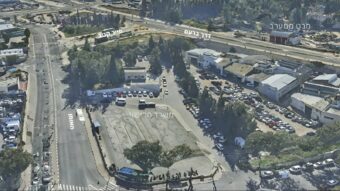
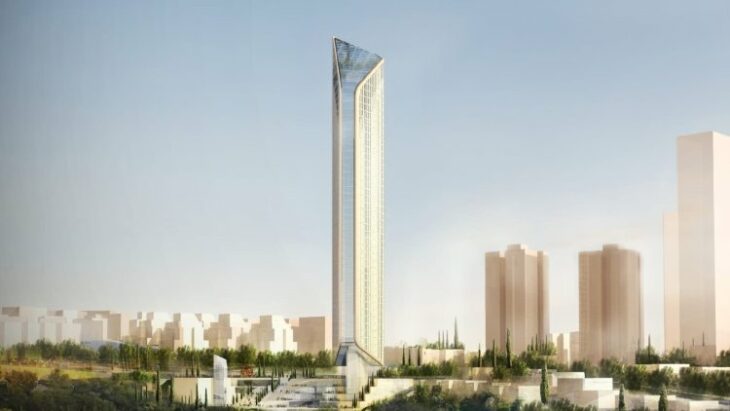
The plan applies to approximately seven dunams on Epstein Street in the Kiryat Yovel neighborhood of Jerusalem. It proposes demolishing an existing old building, expropriation of land, and regulating land-use designations for a new mixed-use project including residences, hotel, commercial areas, and public buildings. It includes two structures: in the northern part, a two-story building with four underground floors for public and commercial uses; and in the southern part, a 42-story combined hotel-residential tower with 240 apartments and five underground hotel floors.

The project generated significant opposition from planning bodies, residents, and environmental organizations. More than 200 objections were submitted, including 100 represented by Adv. Yossi Havilio, an additional appeal by the Yuvalim Community Administration, and another by the Association of Architects and Urban Planners in Israel. However, the committee noted that neither the World Zionist Organization, responsible for the national institutions on Mount Herzl, nor Yad Vashem submitted objections. The Ministry of Defense approved the plan, and no government ministry submitted an objection.
Adv. Havilio argued that the proposed tower in the Epstein Complex, near Mount Herzl and Yad Vashem, represents unprecedented harm to Israel’s most important national memorial district. He claimed the tower’s height and scale significantly deviate from the preserved planning and landscape character of the area, established during the British Mandate to maintain a low and modest skyline.
The appeal by the Association of Architects and Urban Planners claimed that the tower visually and symbolically harms the national memorial sites at Mount Herzl and Yad Vashem, designed according to an architectural vision emphasizing open, green, low-rise landscapes, undermining the intended proportions and principles that guided their design.
Havilio further argued that previous decisions and planning documents establish a clear precedent prohibiting high-rise development near Mount Herzl. He asserted that the approved 42-story tower in the Epstein Complex severely violates the light-rail corridor policy, which designates the site for low-volume construction of up to ten stories due to the cultural and planning sensitivity of Mount Herzl, Yad Vashem, and Ein Kerem.
The architects’ association also argued that the plan deviates extremely from reasonable planning principles, causing disproportionate harm to national, scenic, planning, and public values. They claimed the tower damages the Jerusalem skyline at a sensitive strategic point that requires restrained construction and harms the cultural, historic, and tourism landscape of Ein Kerem, potentially endangering its UNESCO World Heritage status.
The District Committee argued that the plan provides an appropriate response to population growth and the housing crisis through intensive development along mass-transit corridors, encouraging public transportation, reducing private car use, preserving open spaces through compact construction, integrating public uses, mixed-use development, and high-quality architecture in major urban nodes. The Epstein Complex was noted as fulfilling these national planning goals.
The committee added that claims of harm to Mount Herzl and Yad Vashem were speculative and unsupported by professional evidence, ignoring the significant distance between the Epstein Complex and the memorial sites. The surroundings already include other tall buildings, including two existing residential towers and another approved 30-story tower in the “Top Borochov” plan — all visible from Mount Herzl, similar to the proposed tower.
The Local Committee argued that the District Committee’s decision does not contradict the light-rail corridor policy and that even if there were a deviation, it is justified by professional considerations. They emphasized that the area is clearly designated for volumetric and high-rise development, not limited to ten-story plots. They also noted that the light-rail policy is an administrative guideline rather than a binding statutory plan, allowing justified deviations such as concentrating development into one tower to preserve the unique landscape, consistent with Master Plan 5117.
The Appeals Committee stated that claims of significant visual harm to the ridge line or national memorial sites were not supported by planning material. Professional analysis showed that the planned Epstein Complex is not unusually tall relative to its surroundings. The area is categorized as “high-rise development” under corridor policy, allowing buildings of up to 30 stories near rail routes.
The committee reiterated that the claims of extreme landscape harm were unsupported and that the height of the Epstein Complex is not significantly higher than surrounding buildings. It rejected assertions that the project contradicts mixed-use and high-rise policy, affirming that the plan aligns with principles approved in 2019, including intensifying development along the light-rail line and at the ridge edge.
Regarding the volume of objections, the committee noted that many were submitted in identical wording and that the number of objectors is not a planning consideration. No new professional opinion was presented that would justify halting the Epstein Complex.
The committee rejected claims of procedural flaws or irregularities, stating that the appeal process is not the forum for addressing such issues and that no deviation from required procedures was found.
The committee concluded that, after reviewing all arguments and documents, no grounds were found to justify intervention in the District Committee’s decision. The Epstein Complex complies with planning rules and updated policy, and the concerns raised are not substantiated at a level that would justify stopping the plan.
Shira Talmi-Babi, Chair of the Jerusalem District Planning and Building Committee, welcomed the decision, saying she was pleased that quality planning principles prevailed and thanked the Appeals Committee for issuing a professional decision.
Adv. Amnon Merhav, CEO of the development company, said the decision is good news for Jerusalem and its residents. He noted that projects like the Epstein Complex ensure the city’s renewal while preserving its unique assets, and that the company will invest over NIS 1 billion, reflecting strong confidence in Jerusalem’s development.

Nadlan Center is Israel’s leading real estate news and knowledge platform in Hebrew, created for industry professionals. Founded by experts in the field, it delivers in-depth, up-to-date coverage on urban renewal, planning and construction, taxation, and housing policy — tailored to the needs of developers, investors, planners, and financiers. In addition to its widely read news content, Nadlan Center hosts major industry events, professional conferences, and training programs that support the growth and development of the Israeli real estate sector.
Learn more: https://www.nadlancenter.co.il