Anyone following the headlines could be forgiven for thinking Israel’s housing market bubble is finally bursting. Stories about falling prices, cooling demand, and buyers “waiting it out” dominate the conversation. The message is simple and convincing: hold off, prices are dropping, and better deals are just around the corner. But for foreign buyers, that message isn’t just incomplete — it may be actively misleading. What’s happening in Israel today is not a broad-based collapse in housing values, but a rare intersection of global pressure, expanding local supply, and short-term hesitation. For overseas buyers, understanding that context matters far more than reacting to the headlines.
Yes, transaction volumes have slowed, and yes, local buyers are pausing. But foreign demand has not vanished; it has accumulated. That distinction is critical. Overseas buyers don’t operate on the same rhythm as local buyers, and they rarely make decisions based on month-to-month price movements. Their considerations are longer-term and more complex, shaped by exchange rates, tax planning, family timelines, schooling options, and increasingly, security concerns.
More importantly, foreign buyers are influenced by forces that extend far beyond real estate. Their decisions are often less about “Is this the bottom of the market?” and more about “How do we secure options for the future?” That mindset leads to patience and preparation, not abandonment. History shows that when overseas buyers finally move, they tend to do so decisively.
Global Antisemitism Is Quietly Reshaping Buyer Intent
One factor largely missing from mainstream housing analysis is the broader global climate. Antisemitism is no longer a marginal or abstract concern; it has become visible, normalized, and increasingly widespread. Across North America, Canada, Europe, and Australia, Jewish families are facing realities they never expected to confront again: hostility on university campuses, social exclusion, threats in public spaces, and a growing sense of uncertainty about long-term stability.

As a result, Israel has shifted in the mindset of many foreign buyers. It is no longer viewed solely as a long-term aspiration or emotional connection, but as a practical necessity — an anchor, a backup plan, a place of permanence. This shift does not always translate into immediate purchases, but it profoundly changes intent. Buyers are no longer asking whether they will ever buy in Israel, but how to ensure that they can when the moment comes.
An Unprecedented Expansion of New Housing Supply
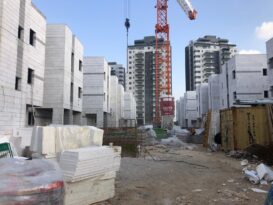
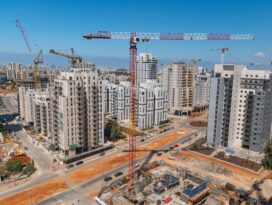
At the same time, Israel is experiencing one of the largest expansions of new housing supply in its history — a development that should matter enormously to overseas buyers. Urban renewal projects, large-scale planning approvals, and entire new neighborhoods are coming online simultaneously across the country. Tel Aviv, Jerusalem, the coastal plain, the north, and the south are all seeing developments that would have been unimaginable just a decade ago. Aging walk-up buildings are being replaced by modern towers, entire districts are being planned from scratch, and transportation infrastructure is finally beginning to catch up with population growth.
For foreign buyers, this represents a fundamental shift. Historically, overseas purchasers were limited to a narrow slice of the market: older apartments, boutique buildings, or high-end luxury projects priced at a premium due to scarcity. Today, for the first time in years, foreign buyers have access to scale and variety. Modern construction, proper parking, elevators, safer buildings, usable outdoor space, and flexible payment schedules spread over years rather than months are now widely available.
More Supply Does Not Mean a Weak Market
This surge in supply is often misinterpreted as weakness. In reality, it reflects market maturity. More inventory does not automatically translate into falling prices; it creates choice. It allows developers to compete on terms rather than forcing buyers to compete on price. It introduces breathing room into a market long defined by urgency and scarcity — and in Israel, breathing room is extraordinarily rare.
Ironically, this very expansion is helping fuel the misleading “price drop” narrative. National averages are distorted by government-subsidized housing programs, regional slowdowns, and technical comparisons that are largely irrelevant to foreign buyers. Overseas purchasers are not buying lottery-allocated apartments or subsidized housing. They are buying in the open market, in locations with enduring demand, limited long-term land supply, and deep emotional pull.
When those segments are examined independently, the picture looks very different. In many of the areas most popular with foreign buyers — strong Jerusalem neighborhoods, coastal cities, and well-located new developments — prices have not collapsed. What has changed is leverage. Sellers are more patient, developers are more flexible, and negotiations are possible in ways that felt unimaginable just a few years ago.
That is not a distressed market; it is a recalibrating one.
Why Waiting for “Confirmation” Can Be Costly
For foreign buyers, this distinction is crucial. Waiting for a dramatic price correction may make sense on paper, but it ignores how Israel’s housing market actually behaves. Corrections here tend to be shallow, uneven, and short-lived. What often follows is a sharp return of demand that absorbs available inventory far faster than expected. Periods of hesitation are followed by sudden waves of buying, and when that happens, inventory that once felt abundant can disappear quickly.
This is why relying solely on headlines is risky. Media framing tends to flatten complexity, treating Israel’s housing market as a single organism rather than a fragmented, regional system shaped heavily by who is buying, not just how many.
A Rare Moment of Balance for Foreign Buyers
Foreign buyers should also recognize that today’s conditions are unlikely to last indefinitely. Supply is strong now, but it will not remain equally accessible forever. Construction cycles end, financing conditions shift, and developer flexibility tightens as confidence returns. These windows rarely close gradually; they tend to shut suddenly.
What makes this moment unique is balance. Rarely do we see geopolitical urgency alongside genuine choice. Rarely do foreign buyers have the time and space to evaluate, compare, negotiate, and plan without pressure. Today’s environment allows for thoughtful decision-making rather than reactive purchasing driven by fear or competition.
That does not mean waiting indefinitely. A common mistake foreign buyers make is assuming that national trends apply uniformly to the specific places they want to buy. They wait for confirmation that rarely comes, only to re-enter a market that feels tighter, faster, and more expensive than expected.
This isn’t about predicting the next quarter. It’s about understanding structural reality. Israel remains a country with constrained land, a growing population, and a powerful emotional pull for Jewish buyers worldwide. Global instability is not receding, antisemitism is not reversing course, and demand from abroad is not disappearing — it is regrouping.
The real question for foreign buyers is not whether prices will dip another fraction of a percent. Headlines come and go. Housing cycles evolve. But the combination of global pressure and local opportunity Israel is experiencing as we move into 2026 is rare — and history suggests that when foreign buyers return, they don’t wait for the headlines to catch up.

Debbie Goldfischer is the founder and CEO of Buyitinisrael and the host of the Israel Real Estate Podcast: On The House. A prominent figure in real estate since 2004, Debbie has spent two decades helping foreign buyers successfully purchase homes in Israel. Seeing a lack of reliable, English-language resources for navigating the Israeli property market, she launched Buyitinisrael.com in 2020. In addition to leading the platform, Debbie is available to personally assist you in finding the right property—whether new or resale—anywhere in Israel.
To connect with Debbie, email [email protected].