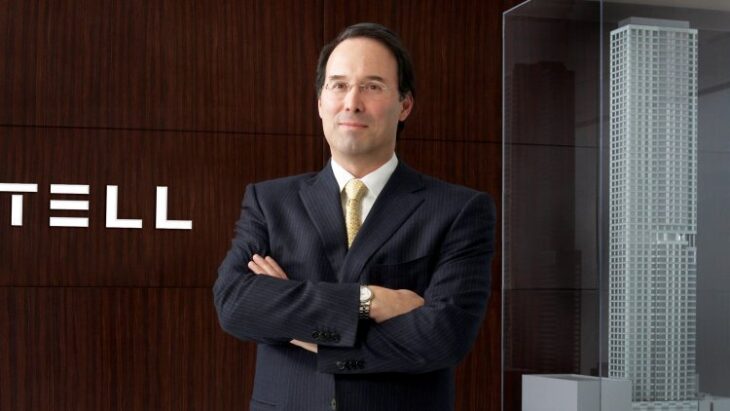
That’s what Jewish-American real estate tycoon Gary Barnett, owner and chairman of “Extell,” said cynically today (Tuesday), in light of the complications surrounding the Greek Orthodox Church lands he purchased. His remarks were made during a real estate conference held by Calcalist in Tel Aviv. Meanwhile, a senior researcher at the Ministry of Finance explained why even an interest rate cut won’t return housing prices to their previous levels, and where Metro workers will live.
By Dror Nir Kastel, Nadlan Center
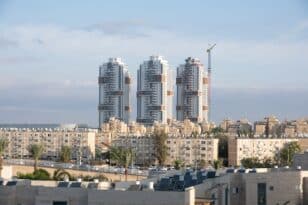
The owner and chairman of Extell, Jewish-American real estate magnate Gary Barnett, expressed growing frustration today (Tuesday) regarding the massive urban renewal project he is promoting on the Greek Orthodox Church lands in Jerusalem. “There’s a solution with a happy ending for the tenants and for us — some just need time to understand it,” he said. “I hope I’ll start building in Jerusalem while I’m still alive,” he added in an interview during the Calcalist Real Estate Economy 2025 conference in Tel Aviv.
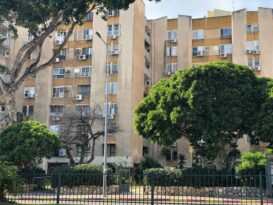
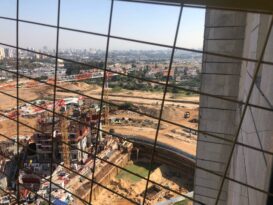
It should be recalled that in July 2023, Barnett purchased the Greek Church lands in central Jerusalem from the Nayot company, led by the Ben David family, for NIS 750 million. The lands he acquired currently include 1,000 housing units, hotels, public buildings, and more. The lease agreement between the JNF (Keren Kayemet LeYisrael) and the Church expires in 2051, raising questions about the future of thousands of residents who hold sublease agreements with the JNF.

Barnett referred to the apartment owners, whose leasehold rights as subtenants of the JNF are set to expire between 2050–2052, saying: “Everyone who bought knew it was a leasehold contract and knew they would have to return the land. It’s not a contract with the State but with the JNF, which leased it from the Church. No one will be forced out of their homes in the next 25 years. Let’s not be hysterical — on one hand, people knew what they were getting into, and on the other, we have an excellent solution in which ownership will be transferred to them at no cost. Many residents have already signed, but there are vested interests that don’t want us to sign with the residents and are causing them harm.”
When asked about his decision to enter the Israeli real estate market, Barnett responded cynically: “I’m starting to wonder myself why I entered Israel, and yet, it was and still is an open market for real estate funds. The American market is less open. It looked like an opportunity; I had the ambition to be an Israeli real estate developer, with businesses also in New York.”
Demand Will Return With Rate Cuts, But Not To Previous Price Levels
Galit Ben Naim, Senior Deputy to the Chief Economist at the Ministry of Finance, said in an interview that even an expected interest rate reduction won’t reverse the housing price trend. “Demand will return with the rate cut, but not at the prices we saw,” she stated. According to her, “The process of raising interest rates affects housing demand. The Bank of Israel acted prudently, but the slowdown in the market began even before rates reached 4.75%. Considering the oversupply — 80,000 unsold apartments — the high interest rate, and the reduced purchasing power, a correction was necessary. We’re also seeing demand shifting toward the periphery.”
She added that declining purchasing power is pushing the public toward the second-hand market: “From January to August, we’ve seen a 33% decrease in new home sales in the free market, and a moderate increase in second-hand transactions. At the end of the day, it’s about price gaps — the greater the gap between new and second-hand apartments, the sharper the decline in contractor sales.”
When asked why housing starts are increasing nonetheless, Ben Naim explained that developers have no choice: “Those who bought land with leverage have two options — either build or sell to another developer who can. Regarding urban renewal — it’s a trap, because you have to provide apartments for existing residents, and if you’re late on delivery, you bear rental costs.”
No Place To House Metro Workers
In a panel discussing infrastructure challenges in general, and the Metro project in particular, Yael Salomon, Deputy Director of Infrastructure at the Planning Administration, said: “There aren’t enough workers for construction around the Metro, and there’s still no place to house them. This is one of the toughest challenges regarding the Metro project.”
Assaf Simon, CEO of BST Initiation, claimed that following the approval of TAMA 70 and the increased betterment levies, “urban renewal has been harmed. The market is full of offers to buy urban renewal companies amid uncertainty around the Metro and the levies. Developers have entered uneconomic projects. The key to success in this business is cash flow — that’s what determines survival. When you take on six or seven projects, it becomes hard to sustain over the years.”
Dan Menachem, Partner at Reality Fund, added: “Under the Metro Law, we’re facing a cumulative levy of 105%, making it unfeasible to move projects forward. There will be no choice but to reduce the levy from 75% to 60%. It’s reminiscent of the early days of the TAMA 38 program — municipalities still don’t know how to handle it, and there’s a gap between local authorities and districts. Once this tension is resolved, we’ll see many plans finally released.”

Nadlan Center is Israel’s leading real estate news and knowledge platform in Hebrew, created for industry professionals. Founded by experts in the field, it delivers in-depth, up-to-date coverage on urban renewal, planning and construction, taxation, and housing policy — tailored to the needs of developers, investors, planners, and financiers. In addition to its widely read news content, Nadlan Center hosts major industry events, professional conferences, and training programs that support the growth and development of the Israeli real estate sector.
Learn more: https://www.nadlancenter.co.il