By Nimrod Buso, Nadlan Center
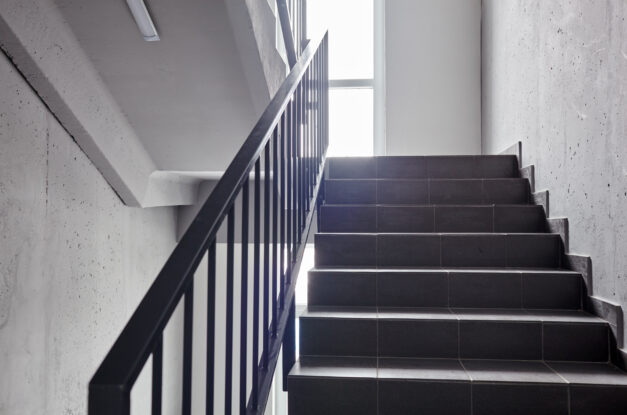
A regulatory change currently under discussion could unlock dozens of stalled urban renewal projects across Israel. This week, the Subcommittee for Regulations of the National Planning Council is set to debate a proposed amendment to the definition of a “high-rise building,” with the aim of raising the threshold at which residential buildings are required to include two stairwells. At present, any building over 11 stories must include two stairwells—a regulation that has rendered the construction of 12- and 13-story buildings economically unviable and has blocked renewal projects where greater height is unnecessary.
The Subcommittee for Construction and Regulations of the National Planning Council is expected to convene this coming Thursday to consider a decision that could ease the bottleneck affecting dozens of urban renewal initiatives currently lacking economic feasibility. As part of the proposal, the committee is expected to recommend that the National Planning Council revise the definition of a “high-rise building,” thereby removing the requirement that residential buildings in the 12–13 story range be constructed with two stairwells.
Under existing building regulations, any residential structure exceeding 11 stories must include two stairwells. This obligation is primarily rooted in safety and life-saving considerations in the event of a fire, in accordance with the position of Israel’s Fire and Rescue Services. However, in practice, this regulation has made the construction of 12- to 14-story residential buildings far less attractive for developers. In the context of urban renewal projects, it has often been enough to tip projects into full economic infeasibility.

In recent weeks, Nathan Elathan, Head of the National Planning Headquarters, revealed his intention to advance a change that would raise the height threshold requiring two stairwells in multi-story residential buildings. Under the proposed approach, even 12- and 13-story buildings would be permitted to include only a single stairwell. This coming Thursday, the Subcommittee is expected to discuss a recommendation aligned with this policy direction.
That said, even if the Subcommittee for Regulations decides to recommend such a change, the decision will not become binding unless and until it is formally approved by the National Planning Council. The body most likely to oppose the move is the Fire and Rescue Authority, which has expressed interest in maintaining the current regulatory framework.

Nadlan Center is Israel’s leading real estate news and knowledge platform in Hebrew, created for industry professionals. Founded by experts in the field, it delivers in-depth, up-to-date coverage on urban renewal, planning and construction, taxation, and housing policy — tailored to the needs of developers, investors, planners, and financiers. In addition to its widely read news content, Nadlan Center hosts major industry events, professional conferences, and training programs that support the growth and development of the Israeli real estate sector.
Learn more: https://www.nadlancenter.co.il