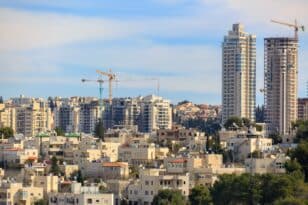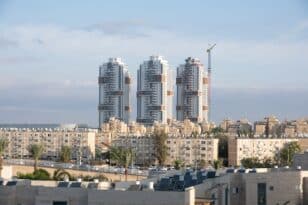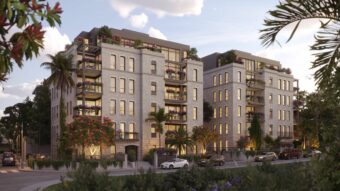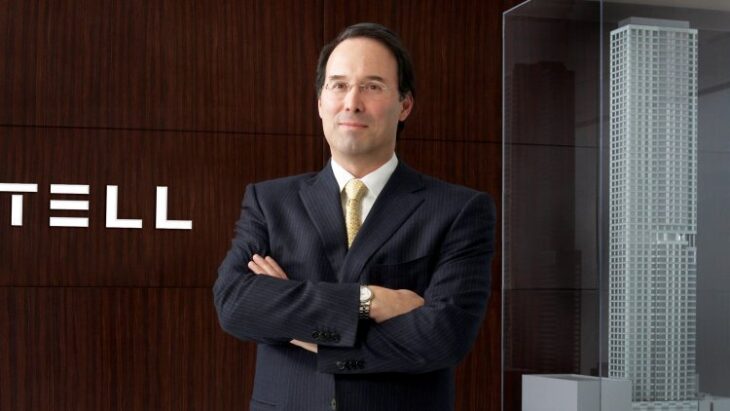
More than 120 apartment owners on church land in Jerusalem have already signed preliminary agreements with Extell, owned by American billionaire Gary Barnett, to promote an urban renewal project in the area, according to the company’s response to a Supreme Court petition filed by about 200 leaseholders whose leases are set to expire between 2050–2052. Extell added that hundreds more are currently in negotiations. Under the company’s proposal, a leaseholder whose apartment serves as their primary residence will receive a new apartment under full ownership of the same size, as part of a redevelopment plan, without any additional payment.
By Nimrod Buso, Nadlan Center
Extell, owned by Barnett, submitted its response last Thursday to a petition filed with the High Court of Justice by a group of sub-leasers on lands it owns in central Jerusalem, known as the “Church Lands.” In its reply, the company disclosed that more than 120 of the roughly 1,000 apartment owners on subleased land had signed letters of intent with Extell to advance an urban renewal plan. The company further argued that the petition is baseless, misleading, and does not reflect the legal situation, the reality on the ground, or the best interests of most residents.
The company’s offer includes several tracks depending on owner status: those living in their primary residence or who inherited it, those renting it out or not living there, and those who purchased lease rights after January 1, 2019, when the problematic legal status of the property was already known and had reduced values significantly.

For the first group—those whose apartment is their primary residence—Extell offers the most favorable terms: within the renewal project, they may receive a brand-new apartment under full ownership of exactly the same size at no additional cost, or a larger apartment with an extra 12.5 square meters, by paying NIS 2,000 per square meter.
This saga has been unfolding for nearly a decade, beginning in 2016 with the sale of 571 dunams of church-owned land in central Jerusalem, including Talbiya and Nayot, to a private investor group led by the Ben David family. The land included around 1,000 apartments as well as public institutions, cultural centers, and hotels. Originally leased by the church to the JNF in 1951 for 49 years with an option for another 49, the contracts were extended until 2050–2052.
Residents assumed the JNF would eventually renew or purchase the land outright, but the church’s sale to private investors shocked many, as it raised the possibility that by 2049 they could lose all rights to their homes.
In January 2023, the private investors sold the land to Barnett’s Extell for NIS 750 million—the most expensive real estate deal in Jerusalem’s history. In May 2024, Barnett announced that leaseholders could purchase ownership of the land for NIS 5,000 per square meter, compared to the then-market price of NIS 45,000 per square meter, though many residents rejected the offer.
About 200 leaseholders recently petitioned the High Court in a 700-page filing against the JNF, Israel Land Authority, Extell, the Greek Church, and the Jerusalem Municipality, demanding that authorities secure their rights after what they described as “years of stalling and neglect.”
Extell’s response, filed through the law firm Agmon with Tulchinsky, called for outright dismissal of the petition. The company argued that ownership rights are clearly defined in the original 1950s contracts: once the lease ends, all land and structures return to the owner without compensation. No owner ever had automatic renewal rights. Furthermore, any attempt to extend the leases would cost billions of shekels unnecessarily from public and leaseholder funds—especially when a practical and fair solution is already available.
Extell emphasized that the petition does not protect existing rights but rather seeks to create new ones that owners never held, for the benefit of a minority, at the expense of the majority, while potentially harming progress toward a settlement between Extell and the JNF.
The company noted the urgent need to resolve the land issue and said it continues to pursue agreements with all relevant parties for a balanced settlement that fairly considers all rights and interests, including those of residents.
Extell added: “With proper cooperation, a solution can be reached quickly and efficiently. Legal and legislative proceedings will only delay resolution for years, if at all.” The company also stressed that any final agreement would be made public before signing.
Extell maintains that its current offer is both attractive and fair, noting that more than 120 residents have already signed letters of intent and hundreds more are in advanced negotiations. It also argued that some opponents of the deal are motivated not by residents’ welfare but by private commercial interests, including luxury hotels.
The company concluded that its proposed settlement—along with a potential arrangement between Extell and the JNF—offers a just solution to this complex issue and could save the public significant costs that would otherwise be spent on unnecessary lease extensions.

Nadlan Center is Israel’s leading real estate news and knowledge platform in Hebrew, created for industry professionals. Founded by experts in the field, it delivers in-depth, up-to-date coverage on urban renewal, planning and construction, taxation, and housing policy — tailored to the needs of developers, investors, planners, and financiers. In addition to its widely read news content, Nadlan Center hosts major industry events, professional conferences, and training programs that support the growth and development of the Israeli real estate sector.
Learn more: https://www.nadlancenter.co.il