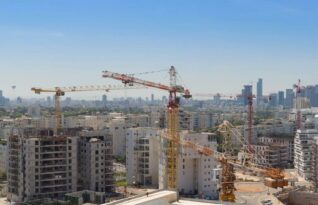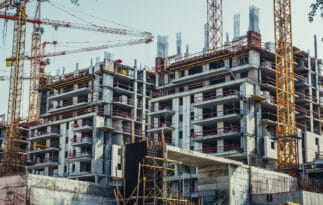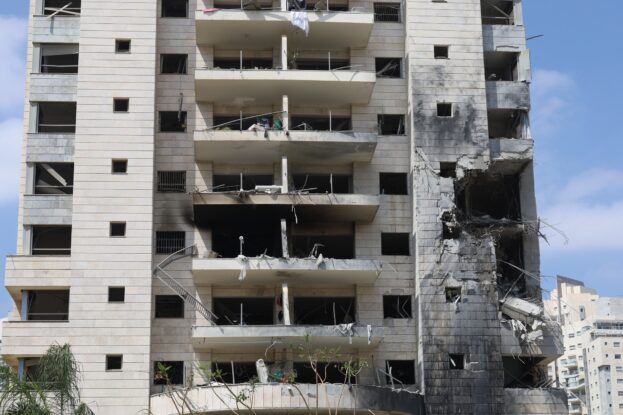
Although it remains unclear whether Operation “Roaring Lion” will succeed in toppling Iran’s ayatollah regime or preventing it from obtaining nuclear weapons, one outcome already appears certain: hundreds of construction projects in Israel are likely to face significant delays. These delays come on top of disruptions that many projects had already experienced after two and a half years of nearly continuous fighting.
By Lee Saadon, Nadlan Center
One of the immediate consequences of this situation is the growing potential for countless legal disputes between developers and homebuyers over delayed apartment deliveries. At the heart of these disputes is a simple but critical question: are developers obligated to compensate buyers for delays caused by war—and if so, who ultimately bears the cost? What makes the situation even more concerning is that the legal answer remains far from clear.
“This will almost certainly become an issue that could accumulate into hundreds, if not thousands, of cases,” warns attorney Avraham Avraman, managing partner and co-head of the real estate department at the law firm S. Friedman, Abramson & Co. “The most orderly way to describe the situation is simply to say that there is no order.”

According to Avraman, the core reason for the uncertainty is the absence of a clear regulatory position. To this day, the Israeli government has not definitively ruled on whether war constitutes a “force majeure” event—an extraordinary circumstance that would legally exempt developers from paying compensation for delays.
“The regulator has never intervened on this issue,” Avraman explains. “There were expectations that there might be some form of intervention—not necessarily direct financial compensation, but perhaps a regulatory framework to clarify the situation. That never happened. In practice, the issue has been left entirely in the hands of the courts.”
“Different Judges Are Reaching Different Conclusions”
The result, well known within the industry, is inconsistent legal rulings. “In the lower courts, we are seeing decisions in both directions,” Avraman says. “The Supreme Court has not yet established a definitive precedent on the issue. There was a general comment by Supreme Court President Yitzhak Amit that these are circumstances that should be taken into consideration—but nothing more specific than that.”
As a result, courts currently examine each case individually. Judges look at whether construction activity was genuinely disrupted, whether workers were present on site, how many were actually working, what efforts were made to bring in foreign labor, and what the site work logs indicate. In other words, the key question is whether the delay reflects a genuine disruption or merely an excuse.
“I personally handled—and am still handling—several arbitration and mediation cases related to this issue,” Avraman says. “There is no single clear answer. That is why the most accurate description of the current situation is simply disorder. Different judges often approach the issue differently.”
Courts may also examine whether developers should have been better prepared for ongoing security instability. “At some point,” he adds, “courts may argue that developers should have anticipated that the security situation would continue. Some developers have indeed extended their project timelines in advance.”
When asked whether the government might eventually step in to resolve the uncertainty, Avraman is skeptical. “If the state did not intervene during the coronavirus pandemic and did not intervene during the war, I doubt it will do so now—unless, Heaven forbid, there is a large-scale catastrophe that completely paralyzes the economy. I don’t believe we will reach that point. The state chose not to intervene, left the issue to the courts, and the economy continued to function.”
Double Financial Pressure on Developers
For developers, the situation can be particularly complex. They must navigate between the constraints faced by contractors and the expectations of apartment buyers. In urban renewal projects such as evacuation-and-reconstruction developments, existing homeowners add another layer of complexity.
According to the CEO of a large development company, the developer may end up paying twice. “In urban renewal projects, the developer is obligated under agreements with existing residents to pay their rent and provide guarantees as long as they remain outside their homes. If delivery is delayed by a year, the developer continues paying rent throughout that entire period while also maintaining the financial guarantees. These are enormous sums that can seriously threaten the project’s financial viability.”
If the fighting continues for several weeks—as many officials in Israel’s defense establishment and the White House currently expect—the impact on construction sites could be substantial.
“On one hand, the industry is defined as essential,” the executive says, “but in practice, there are many limitations. Not every site has adequate protection, bringing in foreign workers is difficult, and there are numerous logistical problems.”
Another widely discussed obstacle since the start of the operation has been contractors’ inability to operate cranes at construction sites due to safety authority restrictions on ground-based operations.
According to Avraman, even when military operations end, the industry will not restart immediately. “It takes time for projects to return to routine activity and for workers to return to construction sites. We saw this during the pandemic and have seen it repeatedly since the start of the war. That’s why this phenomenon may only worsen.”
Developers Are Extending Delivery Timelines
The situation is especially complicated for developers who must balance contractor constraints with buyer expectations. In urban renewal projects, the original apartment owners further complicate the equation.
The CEO explains that contractors may also demand compensation for extended construction timelines. “The contractor argues that the delays were caused by force majeure, such as labor shortages or restrictions imposed by local authorities. They priced the project based on a specific timeline, and now the work is extending beyond it. From their perspective, they deserve additional payment.”
If that were not complicated enough, the 2022 amendment to Israel’s Sale Law has introduced additional complexity. It means that buyers in the same building may hold different legal rights depending on when they purchased their apartments.
“There are cases where one apartment was purchased before the amendment and another afterward,” the executive explains. “Both buyers paid the same price, but their legal rights differ. Someone who bought before the amendment may face the argument that the delay was caused by force majeure and, therefore, no compensation is owed. Someone who bought after the amendment can argue that the developer remains responsible regardless.”
According to the executive, the ultimate effect is that most of the risk eventually falls on the developer. “The current legal situation is unclear. Courts are ruling in different directions, and the Supreme Court has not yet established a binding interpretation. What is clear is that after the amendment to the Sale Law, it has become far more difficult for developers to prove force majeure.”
Homebuyers Bear the Immediate Burden
While developers and contractors debate responsibility, the immediate financial impact is being felt most acutely by homebuyers. Attorney Gal Hasson, who represents families dealing with delayed apartment deliveries, describes a difficult reality. “I see up close how a national tragedy turns into a financial tragedy inside households.”
Many families, he says, find themselves paying twice as much for housing. “These are people who sold their previous apartment and relied on the delivery date of the new one. When delivery is delayed, they end up paying both a mortgage and rent.”
Beyond the financial strain, the prolonged uncertainty takes a heavy emotional toll. “They are living out of boxes for months,” Hasson explains. “They don’t unpack because every month the developer sends another brief letter postponing the delivery date by another month.”
In some cases, children are already registered in schools in the new neighborhood, forcing parents to drive them there each morning simply to maintain their social connections.
“There is clearly a legal problem with how responsibility is distributed between buyers, contractors, and the state,” he says. “Ultimately, the burden falls on the buyer.”
Even when buyers decide to pursue legal action, compensation can take years. “A lawsuit over delayed delivery can take two to three years to resolve,” Hasson explains. “Meanwhile, the buyers continue paying rent, mortgage payments, and sometimes legal expenses.”
Israel’s court system is already overloaded, he notes, which often works to the advantage of contractors who can negotiate settlements with buyers. “The family needs money to survive the next month—not to close debts three years from now,” Hasson concludes. “Unfortunately, there is currently no real-time solution to this emergency situation.”

Nadlan Center is Israel’s leading real estate news and knowledge platform in Hebrew, created for industry professionals. Founded by experts in the field, it delivers in-depth, up-to-date coverage on urban renewal, planning and construction, taxation, and housing policy — tailored to the needs of developers, investors, planners, and financiers. In addition to its widely read news content, Nadlan Center hosts major industry events, professional conferences, and training programs that support the growth and development of the Israeli real estate sector.
Learn more: https://www.nadlancenter.co.il